More climate money for Africa? Europe says use what's already pledged
By Navin Singh Khadka
Environmental correspondent, BBC World Service
In Uganda's northern Karamoja region, Elijah Lobur and his family now eat just one meal a day.
A severe drought that began in April has destroyed crops, while food brought in from elsewhere has become increasingly unaffordable.
"Seven months without rain has brought us to this point where we now live in hunger," the 44-year-old farmer, who lives with his grandmother, wife and five children, told the BBC.
"Even some of the wild plants that we used to eat have withered and dried up."
Local officials say more than 90% of crops have failed in the region, where agriculture is largely rain-fed.
Further south, in Malawi, Mathews Nkhambala has experienced the devastating effects of flooding.
In April 2024, barely a year after Tropical Cyclone Freddy devastated the country's southern region, floods displaced people in Chikwawa district.
Nkhambala fled to higher ground with his wife and four children as floodwaters swept through his village.
"As we reached a safe height, we saw our house swept away right in front of our eyes. Everything I had was gone," he told the BBC.
He lost a harvest of 15 bags of sorghum and part of his farmland. His children were so traumatised that they stopped going to school.
"They refused to go to school for many months. They were so disturbed," he recalled.
After relocating and trying to rebuild his life, Nkhambala is now facing another climate challenge - this time a lack of rain.
"This time we fear there may be no harvest. I have no clue what I will do."
A government assessment after Cyclone Freddy found that Malawi had experienced more than 50 disasters linked to storms, floods, landslides and droughts since 1980, affecting millions of people.
While Uganda and Malawi are suffering the effects of climate change and their governments are asking for assistance adapting to the new global weather patterns, they are among 23 African countries yet to submit National Adaptation Plans (NAPs) to the UN climate convention secretariat.
These are the plans that detail how climate change has affected them and the risks they face, and so help make a case for what assistance they need. Without them, experts say, it becomes difficult to secure funding.
"Our region has experienced cyclical droughts for decades, but there has been no action plan to tackle these climate impacts," said Milton Lorpia, who works for Warrior Squad Foundation in Karamoja region of Uganda.
"If only such a plan were in place and implemented, it would certainly have helped us."
The African Group of Negotiators at the ongoing UN climate summit (COP31) in Turkey is pushing for adaptation finance to be tripled by 2035, from an annual $40bn (£30bn) baseline that it says developed countries committed to providing by 2025. The interpretation of that commitment remains contested.
The proposal was not accepted for formal negotiations at the summit, although African negotiators have continued to push for it.
The funding is intended to help vulnerable countries prepare for and withstand climate change-induced extreme weather, such as droughts, floods and wildfires.
But the European Union, one of the largest providers of climate finance, says the priority should be ensuring existing commitments reach vulnerable countries rather than setting new funding targets.
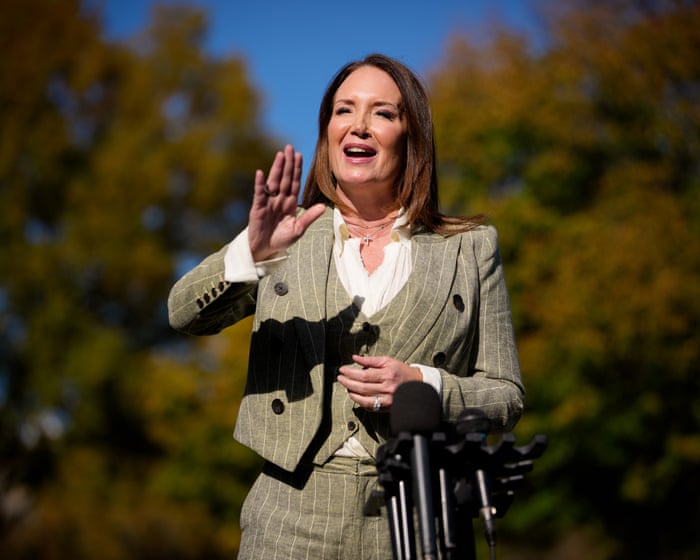
"We haven't come to the table with additional monies or additional capital. It's about what we have committed already and ensuring it's deployed," Darragh O'Brien, who leads the EU delegation at COP31 on behalf of the Irish presidency of the Council of the EU, told a press conference.
He acknowledged that developing countries faced difficulties accessing available funding, saying the process needed to be improved.
Wopke Hoekstra, the European Commission's climate commissioner, also argued that the summit should focus on delivering existing pledges rather than making new ones.
"If you are a vulnerable nation in the Pacific or one of the LDCs (Least Developed Countries) and the money is in the bank but does not land on the ground then it is effectively meaningless," he said.
'It can kill us': Kenyans fear impact of El Niño with floods predicted
A really simple guide to climate change
Hoekstra said the EU had provided $30bn of the $100bn in climate finance committed by developed countries in recent years, adding that other wealthy nations should contribute more.
The scale of the need is substantial. According to the UN's Adaptation Gap Report published last year, sub-Saharan Africa requires about $51bn annually in adaptation finance, while the Middle East and North Africa needs $112bn.
Globally, developing countries will need about $300bn annually by 2035, according to the UN's latest report. Yet they received only about 10% of that amount from developed countries in 2024.
Climate-related loss and damage in Africa is projected to cost $440bn between 2020 and 2030, according to Nairobi-based think tank Power Shift Africa.
Under the 2015 Paris climate agreement, developed countries are required to provide financial support to developing nations, including for climate adaptation.
But why have so many African countries failed to prepare plans that could help them identify their needs and build resilience?
"If you look closely, the countries that are yet to submit their NAPs are already dealing with multiple crises, including debt distress, economic pressures and other issues," said David Abudho, climate justice lead at the aid agency, Oxfam.
"Their governments' ability to invest in climate adaptation is limited."
Sheila Apiny, regional climate justice adviser at ActionAid, said the lack of plans reflected a wider shortage of financial and technical support.
"The absence of NAPs in so many countries is, in itself, evidence of an adaptation finance and capacity gap," she argued.
She said this created a vicious cycle - countries lack support to prepare their plans, while not having the plans makes it harder to secure funding for climate resilience.
"When countries lack adequate adaptation planning and, more importantly, the resources to implement those plans, governments are forced into a cycle of responding to disasters instead of preventing or reducing their impacts," said Amos Wemanya, senior climate adviser at Power Shift Africa.
"Instead of investing in early warning systems, climate-resilient agriculture, water security and flood protection, scarce public resources are repeatedly diverted towards emergency relief and reconstruction. This costs more over time and leaves communities increasingly vulnerable."
African negotiators acknowledge that adaptation plans help countries prioritise investments and attract funding, but argue that their absence should not be used to deny them financial support.
"Of course, having a comprehensive NAP helps countries prioritise investments and prepare proposals for climate finance," said Mahlet Eyassu Melkie, a senior strategic adviser to Ethiopia's COP32 presidency.
"But Africa's adaptation financing needs are based on scientific assessments, climate vulnerability, national priorities and regional estimates – not simply on whether every country has submitted a particular planning document."
The UN Development Programme, which has helped more than 45 countries prepare their plans, said NAPs can help governments mobilise international support and coordinate climate action.
Fred Njehu, a Pan-African political strategist at Greenpeace Africa, said their absence could nevertheless create significant obstacles.
"It is fair to acknowledge that missing adaptation plans act as a major functional barrier that severely bottlenecks the speed, volume and quality of international funding a country can access," he said.
But having a plan does not guarantee the money needed to implement it.
"Even countries that have completed their NAPs have not received money anywhere near what they require for implementation of their adaptation plans," Apiny said.
Kenya offers an example of how adaptation measures can help communities cope with climate pressures.
In the country's arid and semi-arid south-east, concrete sand dams slow the flow of seasonal rivers, allowing sand to accumulate and store water underground. Communities can access it during dry periods using hand pumps or by scooping it out.
UK charity Sand Dams Worldwide and its local partner, the Africa Sand Dam Foundation, said they had built about 1,300 such dams, improving access to water as droughts become more frequent and intense.
But many vulnerable communities elsewhere on the continent are still waiting for similar interventions.
Back in drought-hit Karamoja, Lobur wonders how different things might have been if farmers had access to small-scale irrigation schemes.
"We do have some underground water sources in some places. If there were proper plans and programmes, we could have tapped them to grow food, but we are having to live in hunger instead," Lobur said.
"My grandmother keeps reminding us how she lost eight children during a famine-like situation in 1982, and we all fear we might perish like that too."
You may also be interested in:
Survivors of Uganda's deadly landslide seek justice at the UN
What is the Paris Agreement and why does 1.5C matter?
Global nature talks reach deal but money remains an issue
Go to BBCAfrica.com , external for more news from the African continent.
Follow us on Twitter @BBCAfrica , external , on Facebook at BBC Africa , external or on Instagram at bbcafrica , external
Effects of global warming
BBC Africa podcasts