A Melbourne furniture startup is taking an unconventional approach to one of online retail’s biggest challenges: managing costly and logistically complex product returns.
Its solution? Giving customers 75% of their money back if they donate the unwanted furniture to charity.
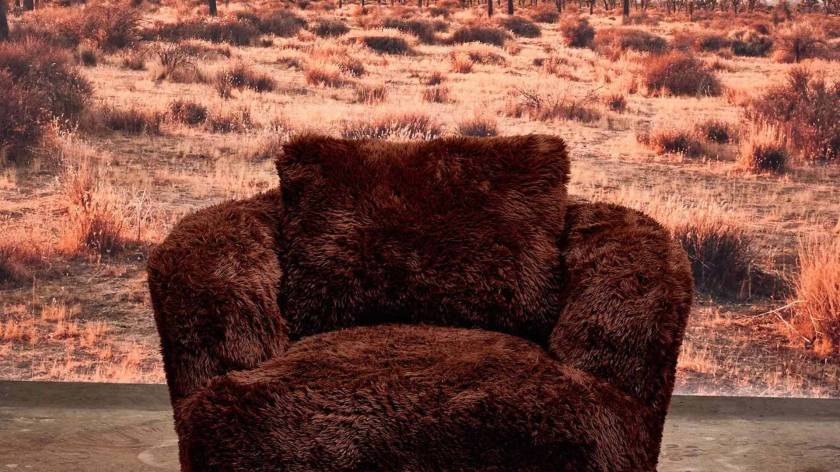
Grumpi Furniture was launched by brothers Cory and Dion Verstandig just 12 months ago. The business sells vacuum-compressed sofas, armchairs and ottomans that inflate to their original size once unpacked.
The online-only business offers customers 30 days to change their minds.
Grumpi co-founder Cory Verstandig told SmartCompany the initiative was put in place to give customers more confidence in buying furniture they haven’t seen or sat on.
Smarter business news. Straight to your inbox.
For startup founders, small businesses and leaders. Build sharper instincts and better strategy by learning from Australia’s smartest business minds. Sign up for free.
By continuing, you agree to our Terms & Conditions and Privacy Policy .
“It’s very difficult to convince someone of potentially the quality, or the size, or the shape of a product if they can’t actually see or feel it.”
Related Article Block Placeholder Article ID: 344528
Furniture brand Eva has opened a Melbourne showroom that feels like home
Returns with purpose
Once unpacked, the furniture is difficult to recompress. Purchasers cannot easily return items in the same way.
Instead, customers seeking refunds can provide receipts and proof that they have donated their furniture to a registered charity.
Grumpi retains 25% of the sale price to help cover the original delivery and product costs.
Verstandig said the initiative was also about reducing waste and preventing unwanted furniture from ending up in landfill.
He said the policy supported the circular economy by ensuring unwanted furniture was reused “hopefully for years and years to come”.
Fewer than 1% of orders have been returned since the company’s launch.
Customers can choose which charity they donate to. Verstandig hopes to establish formal charity partnerships as the business grows.
Fixing the last mile problem
The brothers previously ran an online business called The Ottoman Shop, where they discovered the high cost of delivering furniture.
They took inspiration from mattress-in-a-box businesses like Koala and Sleeping Duck and then spent 18 months perfecting their line of compressed furniture.
“We wanted to try and solve that last mile delivery problem in Australia,” Verstandig said.
Grumpi primarily appeals to a younger demographic, such as first-home buyers, people who live in apartments or shared-living situations.
Its top-selling Peachi armchair is normally $439 and a two-piece modular sofa starts at $829.
“For us, the real aim of our business is to target a younger generation that potentially don’t have the budget to buy their forever couch,” Verstandig said.
“But they want something a little bit cooler, more trendy than that real entry level furniture.”
Grumpi has outsourced warehousing and dispatch to a third-party logistics provider in Melbourne’s southeast.
Related Article Block Placeholder Article ID: 332759
Sofa so good: Aussie furniture brand Koala eyeing April IPO
Until recently, the brothers have been running Grumpi while working full-time.
Verstandig, who spent five years at online retailer Catch , has built his career in e-commerce and recently made the switch to running Grumpi full-time.
Grumpi’s sales have been increasing by 10% to 15% each month, with Verstandig reporting almost a 150% growth month-on-month in November, following the company’s first-ever Black Friday sale.
“Our biggest issue so far has been keeping products available in stock,” he said.
“We’ve been fortunate enough to sell out multiple times.”
The business aims to at least triple its year-on-year-growth next year, and will introduce outdoor furniture.
Verstandig would like to see other retailers follow suit with the same offer when it comes to returns.
“The more retailers that adopt something like this the better,” he said.
Verstandig said retailers needed to continually innovate and adapt their business models to overcome barriers to purchasing and also meet changing customer expectations.
Although the business is online-first, it plans to have a showroom in Melbourne in the second half of 2027. Verstandig said expansion interstate is also on the cards.
Never miss a story: sign up to SmartCompany’s free daily newsletter and find our best stories on LinkedIn .
Digital Business Journalist
Simon Thompson has worked across print, television and radio in Australia, the UK and the United States. His reporting has covered business and financial markets, immigration, politics and water policy. He previously covered UK and European private equity in London and has reported for NPR and PBS-affiliated outlets in the US. Simon studied journalism and politics at Monash University.
Recommended for you
Eloise Keating Sep 9, 2026
SmartCompany Exclusive
Incy Interiors still trading after ‘final’ sale, customer complaints, and Facebook page removal
David Adams Jan 8, 2025
David Adams Mar 9, 2026
Reed Retail Fairs Sydney – the launchpad for what’s next in Australian retail.