
Australia banned nuclear reactors (including fuel fabrication, enrichment and reprocessing plants) via federal government legislation in 1998-1999 (the bills were known as the ARPANSA Act 1998 and EPBC Act 1999 ).
Was this ban rushed through parliament with little debate; just political horse-trading that ignored the public interest? No, nuclear power was banned because public concerns and public oversight were sidelined.
Australian nuclear advocates demand we “have the conversation” about nuclear power, yet do the exact opposite, crafting a truncated account of how the nuclear prohibition eventuated that serves to ignore the conversation about nuclear matters that Australians were actually demanding.
The Australian public wanted their nuclear misgivings taken seriously, and a role in decision-making about nuclear matters. Currently nuclear advocates are ignoring that historical legacy, probably further dooming nuclear aspirations in Australia.
The December 1998 prohibition of nuclear power is routinely presented as originating in a bill introduced in April 1998 to establish the Australian Radiation Protection and Nuclear Safety Agency (ARPANSA).
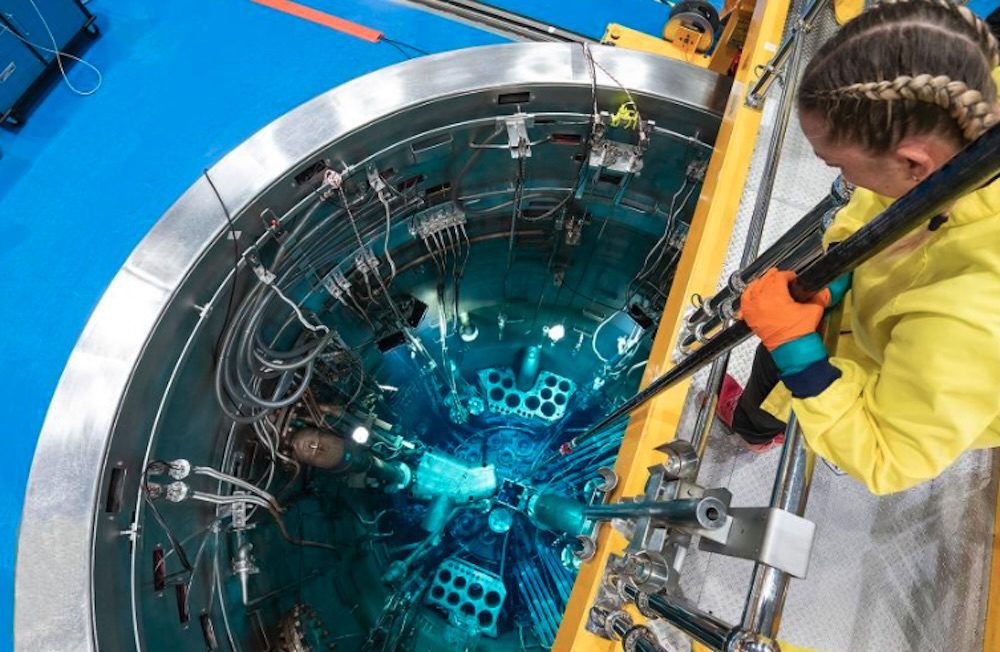
ARPANSA would replace the Nuclear Safety Bureau and the Australian Radiation Laboratory and regulate the new research reactor John Howard’s Liberal-National Party (LNP) had proposed in September 1997 (what became the OPAL reactor in 2007, replacing the HIFAR reactor that operated 1958-2007 at Lucas Heights).
Was the nuclear prohibition horse-traded for a future new research reactor? No, because such an account makes ARPANSA about OPAL and not about then-existing dissatisfaction with nuclear regulation in Australia.
The MacKinnon Review of 1993 had concluded in a highly critical vein that the “regulatory machinery even for the small nuclear industry in Australia is unduly fragmented and unclear.”
Conflicts of interest were not being addressed: the Nuclear Safety Bureau was operating under the authority of the Australian Nuclear Science and Technology Organisation rather than an independent body (as per (even then) IAEA best practice guidelines).
Yet between 2007 and 2026, the story of the nuclear prohibition was rendered ever more myopic, with historical context steadily stripped away.
Two governance documents illustrate this myopic shift. The 2007 report by Ziggy Switkowski – commissioned by Howard in June 2006 to investigate the feasibility of a nuclear industry in Australia – treated the nuclear prohibition as simply part of the policy furniture. Yet a 2023 dissenting report by the LNP (after their request to repeal the prohibition failed) called the prohibition “ unseemly horse trading ”.
The timeframe of the nuclear prohibition had been truncated to make it look ill-considered. Dayne Eckermann’s blog post of 2012 – later republished in December 2018 by the non-profit organisation Bright New World (founded by Ben Heard and Eckermann in 2016; disbanded in 2021) – seems to have kickstarted this (mis)attribution. The ban was attributed to “the ideological position of a minority and a misperceived stigma.”
The ‘minority’ was the Democrats and Greens, who held the balance of power in the Senate in 1998. The House numbers were Howard’s LNP (80) versus the ALP’s (67) seats. In the Senate the LNP’s (35) versus ALP’s (29) seats (39 needed for a majority) empowered the cross-bench (Democrats (9), Greens (1), ON (1) and Independent (1)).
The ‘stigma’ was a long history of opposition to nuclear projects in Australia and more recent 1990’s public concern over French nuclear testing and radioactive waste siting. Though Eckermann outlined the passage of the ARPANSA legislation through multiple hearings and readings April-December 1998, his summary imagined it all in minutes:
“ After a three-and-a-half hour committee meeting, a several-page report drafted over two days, one hour and 36 minutes of debate post-prohibition recommendation, and six minutes of considering the amendments it was decided that Australia should not go down the nuclear path ” (Eckermann 2018).
Nuclear advocates thus represented Australia’s nuclear prohibition as a rushed, ill-considered trade-off – you get a reactor, I get a ban – that failed to consider the public interest.
The school of myopia
Bright New World’s pedestrian account of the prohibition might have went nowhere except it was amplified by the Minerals Council of Australia (MCA). The MCA, in an info-brochure of September 2017 , adopted Bright New World’s account and added the description “horse-trading” to (mis)characterise the 1998 deliberations.
The MCA is both one of the most influential groups in Australia climate policy debates and simultaneously possesses a long history of climate obstruction. The MCA amplifying the “debate-free horse-trading” narrative was thus bound to see the narrative end up a staple of the LNP’s somewhat insincerely tactical support for nuclear power .
The LNP’s 2023 dissenting report to the Senate inquiry into the Removing Nuclear Energy Prohibitions Bill (2022) even further truncated the “debate-free horse-trading” narrative, now down to 10 minutes:
“ Australia’s prohibition was not established after detailed consideration and debate [but] was the consequence of unseemly horse trading in the Australian Senate a generation ago. Australia’s nuclear ban was introduced via a Greens amendment in the Senate on 10 December 1998. There was less than 10 minutes of debate on the matter ” (Coalition Senator’s Dissenting Report 2023).
Debate was “less than half an hour” and Howard was “wedged into a deal,” others opined in 2024.
In an October 2026 podcast ( Ep. 76 ) of Your Energy Answers (hosted by Marcus Lambert), Will Shackel (founder of the non-profit organisation Nuclear for Australia in 2022) blithely accepted this myopic framing and also thought it even offered guidance for repealing the ban:
“ The bans were introduced, not as good policy, it was debated for 10 minutes, on the last day of parliament, in 1998, literally in the middle of the night, it was never a question of the people … just horse-trading … frankly, it took 10 minutes to debate it. The Senate, they’re in parliament next week, why can’t they just take the same 10 minutes and lift it? ” (Shackel 2026).
History: the deep story
The manufactured political outrage of the “debate-free horse-trading” narrative pretends that the federal nuclear prohibition of 1998 can be understood as a discontinuous and local parliamentary phenomenon of 1998. The decision is constructed as a surprise, sprung on Australia by minority interests.
However, the nuclear prohibition was continuous with decades-long and widespread disquiet about poor behaviour by those involved with nuclear matters in Australia.
By 1998 there were already state precedents for nuclear bans : in Victoria (1983) and NSW (1986). In Victoria, the Liberals 1967-1982 had supported nuclear power to the extent of having identified (by 1981) 10 potential sites for reactors.
After losing power to Labor in 1982, nuclear power was unpopular enough (due to French nuclear testing in the Pacific and threats of radioactive waste dumps in Victoria) that a ban passed the Senate (then controlled by the Liberals and Nationals).
In NSW in 1986, Labor controlled both the Senate and Lower House. The nuclear ban reflected widespread concerns about more Chernobyls (it had melted down in April 1986). The Palm Sunday anti-nuclear rallies 1985-1986 had drew more than 300,000 people and trade unions were boycotting foreign warships in the ports.
Those 1980’s state-level bans reflected the public perception that Australia’s nuclear history was secretive, exploitative, prone to dismissing public health and safety (especially that of Aboriginal peoples) and insensitive to power asymmetries distorting democratic accountability. Two stories help illuminate that history.
Elizabeth Tynan’s Atomic Thunder: the Maralinga Story (2016) described British testing of atomic bombs at Emu Field and Maralinga and the disregard for personnel near blasts and Aboriginal communities downwind of blasts. Tynan’s account reveals nuclear cover ups, the misleading of the public about site safety and toxicity of radioactive material, and the servility of the government (Menzies’ Liberals) in the face of nuclear interest groups.
Jessica Urwin’s Contaminated Country: Nuclear Colonialism and Aboriginal Resistance in Australia (2025) traced how Aboriginal people have experienced the nuclear age from atomic testing to uranium mining.
Urwin’s account reveals the way Australia’s nuclear history is an extension of settler colonialism: the government has kept Aboriginal peoples in the dark, sidelining their (nuclear) experiences and obfuscating their voices.
Misgivings about the nuclear industry were widespread. Australian legislators in 1998 were aware of a string of international moratorium or phase out decisions in Austria (1978), Sweden (1980), Spain (1984), Denmark (1985), Italy (1987), Serbia (1989) and Netherlands (1994), with discussions circa-1998 that would lead to phase outs or moratoriums in Ireland (1999), Belgium (1999), Kazakhstan (1999) and Germany (2000).
History: the unmet promises story
Banning nuclear power in 1998 cannot be divorced from that history of publics losing trust in nuclear interest groups. Regulatory reform presented a long-delayed chance to build serious democratic accountability into nuclear decision-making.
Prior to the April-December 1998 parliamentary discussions, there were three federal inquiries that each critiqued the lack of provisions for public involvement in nuclear decision-making.
In September 1992 the ALP had set up an inquiry into a new research reactor. The MacKinnon Review of 1993 ( Future Reaction ) set conditions on any new research reactor and recommended eliminating conflicts of interest in nuclear regulation and the holding of a public inquiry. The ALP government (Keating), despite having won a fifth consecutive term, ignored those two recommendations.
In March 1995 the ALP (Keating) established an inquiry into radioactive waste siting. After 94 written submissions and examining 117 witnesses at 11 public hearings June-December 1995 and four in-camera hearings November-December 1995, No Time to Waste was published in April 1996.
The inquiry reported bipartisan (co-chaired by Chapman (ALP) and Burns (LNP)) condemnation of the Department of Industry, Science and Technology, which had held a parallel inquiry into waste transport but been uncooperative throughout, including not having replied to concerns about radwaste transport to Wommera (by the City of Port Augusta) until after the waste had been transported.
No Time to Waste reported “considerable anxiety within the community about the adequacy of existing arrangements” regarding how nuclear waste material was governed. Continued inaction on appropriate community representation in nuclear decision-making was considered intolerable.
A third inquiry, a Senate Economics References Committee on a new reactor at Lucas Heights , was established by the LNP in October 1997 (reported in September 1999).
It received 40 written submissions by February 1998 and heard from over 100 intervenors across five public hearings, three of which occurred April-May 1998 as the ARPANSA legislation was being discussed (the remaining two were held in April 1999).
The report concluded that it was evident from early in their inquiry that insufficient movement had occurred since the 1993 MacKinnon Review into resolving conflicts of intertest in nuclear regulation and ensuring public involvement in decision-making.
The prohibition year (1998)
When the LNP introduced the ARPANSA legislation in the Lower House in April and then May of 1998, it framed the Act as removing conflicts of interest per those prior reports’ recommendations . The actual parliamentary discussion is publicly verifiable of course, because Hansard ( House and Senate ) and the ARPANSA website are open access.
The ALP opposition – see Martyn Evans MP (ALP) in the second reading in the House (14 May 1998) – were open to a new reactor and broadly supportive of the regulations.
The ALP grounded its concerns – that the LNP government was not going to allow the public the “luxury” of being involved in nuclear debate – in those prior reports’ warnings about excluding publics . The “little debate” claim thus ignores historical context.
The crucial debate in 1998 was the Senate second reading (9 December 1998). Senator Michael Foreshaw (ALP) moved an amendment that “would require a public inquiry to be conducted prior to any issuing of a license for the establishment of a nuclear installation.”
The LNP had moved toward that concern about public involvement by amending the makeup of an advisory council to include community members. Yet the ALP referred to bipartisan agreement that “Australia has no intention of building a nuclear power facility”. Hence why refer to nuclear facilities at all in the ARPANSA legislation?
Senator Dee Margetts (Greens) agreed with the ALP that prior reports’ public consultations suggested that from a public perspective to “exclude nuclear power reactors from the legislation” would achieve “an improvement in accountability.”
The opposition and minor parties agreed that regulations should require “public participation” prior to licensing not just “notice of the licensing”.
When Senator Natasha Stott Despoja (Democrats) spoke bluntly about a “blanket ban,” she noted this reflected public consultation findings in prior reports that advised a public “right to be involved.”
When the Greens suggested why not simply prohibit nuclear facilities – if there was agreement no party would push for anything more than a new research reactor – this was presented as responding to no movement on guaranteeing a public inquiry as part of decision-making.
Tellingly, Senator Bob Brown (Greens) reminded the Senate that “the government had requested this debate to be as short as possible.”
Senator Michael Forshaw’s (ALP) amendment – which became Sect. 10 of Australian Radiation Protection and Nuclear Safety Act (1998) prohibiting nuclear facilities – thus found its way into the Act because The LNP a) agreed with the opposition and minor parties that Australia had zero intention of any nuclear facility beyond a new research reactor, and b) the LNP rejected including a public inquiry as a prerequisite for licensing a facility.
As per Australian parliamentary conventions, after amendments in Senate committee are agreed to, the Senate itself meets to agree. Forshaw’s amendment was agreed to on 10 December 1998 in the Senate . The bill is then sent to the House, as the nuclear bill was on 10 December 1998 , close to midnight, with a message to vote on amendments.
The amended bill passed ‘on the voices’, meaning the bill was a case of uncontroversial agreement (no division needed). Nuclear advocates’ reference to “no debate and close to midnight” thus reflects a misunderstanding of Australian parliamentary democracy.
Significantly, Jenny Macklin MP (ALP) asked in that House reading why the LNP government had not agreed to a public inquiry being mandated for licensing a nuclear facility. Michael Wooldridge MP (LNP) replied that ARPANSA “is a regulatory body, not a policy making body.”
Despite Australian nuclear advocates pretending they are defending public input, their image of policy making is of a set of bureaucrats in a body charged with regulating nuclear matters also making promotion decisions. Yet blurring regulator-promoter duties was what the creation of ARPANSA was meant to prevent.
Frankly, that’s bullshit
Will Shackle of Nuclear for Australia opined that “ frankly, it took ten minutes to debate it [the ban] . . . why can’t they just take the same ten minutes and lift it? ”. Frankly, that’s bullshit. In the technical sense discussed by Harry Frankfurt’s On Bullshit (2005).
Frankfurt cautioned that while liars retain a respect for truth, bullshitters subvert truth via forms of impression management in which claims are more dumped than carefully crafted. Wherever a person’s obligations or opportunities to speak on a topic exceed their knowledge of the topic, bullshit can eventuate.
The claim that Australia’s nuclear prohibition was little-debated horse-trading is bullshit. If Australia’s pro-nuclear camps wish to ‘have the conversation’ about nuclear matters, stop bullshitting about the history leading to our national ban. What errors led to the ban? Not providing for public input into decision-making. Not taking public misgivings about nuclear actors and the nuclear industry seriously.
Australia’s nuclear prohibition also contains lessons for current renewable energy projects. Governance groups are framing community opposition to renewables as information-provision problems .
Yet community groups and academics realize transmission projects require their social license prior to approval and that where power imbalances and citizen concerns exist it is folly to ignore or stigmatise them .
Decisionmakers about energy projects need to talk to affected communities, not just throw information at them or survey them. The public reports it want to be involved in decision-making, yet in 1998 the LNP refused to build that capacity into legislation and nuclear power was banned because of that unwillingness to empower public involvement.
Darrin Durant is an Associate Professor of Science & Technology Studies at The University of Melbourne
Share on Facebook (Opens in new window) Facebook
Share on X (Opens in new window) X
Share on LinkedIn (Opens in new window) LinkedIn
Share on Reddit (Opens in new window) Reddit
Email a link to a friend (Opens in new window) Email
Print (Opens in new window) Print
Host of giant PV and battery hybrid project wants to sell – and the solar lease is now the big sales pitch
A host of almost a third of the land of one of the country’s biggest solar and battery hybrid projects wants out, and institutions could be the buyer.
Australia missing big opportunity in battery manufacturing, despite having all the minerals
Australia is missing opportunity to create a thriving battery manufacturing industry because it exports critical minerals rather than turning them into high-value products.
Jennifer Dudley-Nicholson
Customers are already subsidising kerbside EV chargers, so why not through a network company, Ausgrid says
Australia’s biggest network operator defends industry’s move into kerbside EV charging, and denies it is the cause of barriers to private participation.
The Driven Podcast: Australia’s EV discount under threat as more Chinese EV brands arrive
Australia’s EV discount hangs in the balance, 300 streetlight EV chargers are set to be trialled in regional NSW, and more Chinese electric cars are heading our way. Plus, what we’ve been driving lately.
The Driven Podcast
Join our WhatsApp Channel
I allow to create an account
When you login first time using a Social Login button, we collect your account public profile information shared by Social Login provider, based on your privacy settings. We also get your email address to automatically create an account for you in our website. Once your account is created, you’ll be logged-in to this account.
Please login or register to comment
Plan to build big battery in ex-premier’s home town will have to dodge abandoned gold mine shafts
Coal power offers “no chance to compete,” says Rio Tinto, as smelters go all-in on renewables
“Deniers and delayers:” Bowen marks 600,000 cheaper home batteries, but says balcony solar cannot be rushed
State adds $4,000 “discount” to energy upgrade scheme, targeting low-income households and renters
“Unbankable:” Fresh blow to Beetaloo as last of Big Four banks rules out finance for new gas pipelines
The line that Australia’s nuclear power ban was never properly debated is, frankly, bullshit
After COP31 letdown, the worst thing Albanese can do now is to sound retreat on EVs, batteries and housing

