
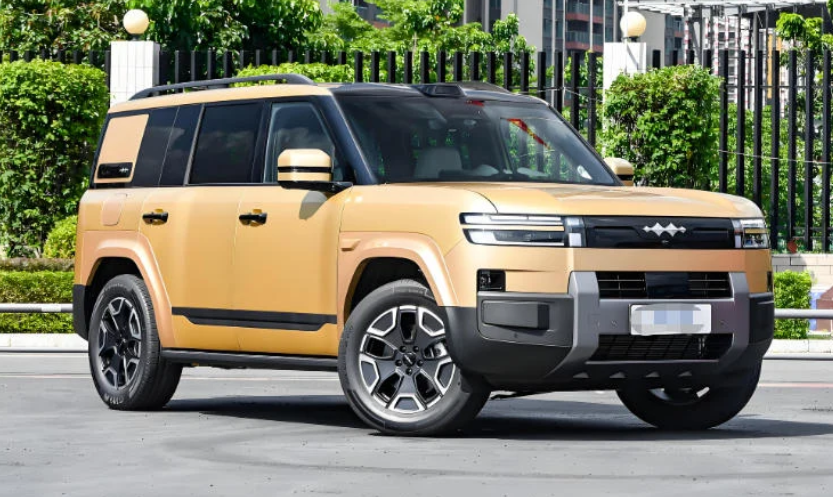
The District Court of The Hague issued an injunction preventing BYD from selling its Fang Cheng Bao Ti7 SUV across the European Union, finding that the vehicle copied distinctive design elements of the Land Rover Defender.
The ruling also temporarily prevents BYD from manufacturing the SUV at its new factory in Hungary, although production of the model has yet to begin at the facility.
BYD has rejected the decision and confirmed it will appeal.
“BYD strongly disagrees with the judgment and will appeal it,” the company said.
“The BYD Ti7 is the result of BYD’s own independent design work and infringes none of JLR’s rights. We will pursue every legal avenue to demonstrate that this decision is incorrect.”
The Dutch court found that the Ti7 incorporated characteristic features of Jaguar Land Rover’s registered European design.
“In these summary proceedings, the preliminary relief judge rules that the Ti7 infringes the EU design of Jaguar Land Rover,” the court said.
“The characteristic and distinctive elements of the design are reflected in the BYD Ti7.”
The legal battle began after Jaguar Land Rover accused BYD of copying elements of its Defender SUV, which recorded global sales of more than 100,000 vehicles in 2025.
In August, court-appointed bailiffs raided BYD offices in the Netherlands, seizing physical and digital documents relating to the development of the Ti7.
However, the dispute took an unexpected turn on November 12 when the District Court of The Hague ordered Jaguar Land Rover to destroy documents obtained during raids at BYD’s offices in Schiedam and Hoofddorp.
The latest ruling comes as Chinese carmakers aggressively expand into Europe, introducing new electric and hybrid vehicles designed to compete with established automotive brands.
BYD launched its Fang Cheng Bao premium division in 2023, targeting the market traditionally dominated by vehicles such as the Toyota LandCruiser Prado and Land Rover Defender.
Industry observers believe the case could have broader consequences for Chinese manufacturers pursuing international growth.
Chen Jinzhu, chief executive of Shanghai Mingliang Auto Service consultancy, said other Chinese automotive companies would be closely monitoring the outcome.
He warned that manufacturers expanding overseas needed to pay greater attention to intellectual property laws and the potential legal consequences of design similarities.
BYD has rapidly increased its international sales, delivering more than 1.51 million vehicles outside China during the first 10 months of 2026, an increase of 93.8 per cent compared with the previous year.
Europe has become a major growth target as Chinese manufacturers seek to offset slowing demand and intense price competition in their domestic market.
JPMorgan previously forecast that Chinese carmakers could sell approximately 2.5 million vehicles across Western Europe by 2028, up from around one million in 2025.
For BYD, the Dutch court’s injunction represents a setback to its European expansion plans, with the company now facing a legal challenge over the design of one of its premium SUVs.
The ruling is preliminary, and the dispute remains unresolved pending further legal proceedings and BYD’s planned appeal.
