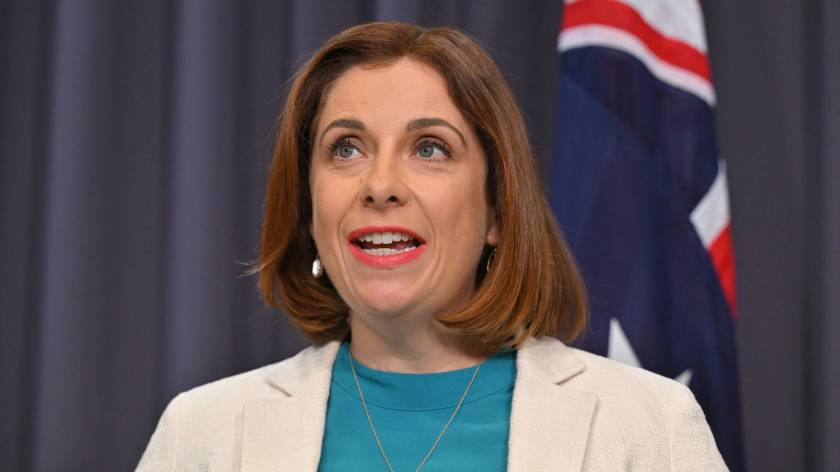
Minister for Communications Anika Wells has confirmed there will be a small business carve-out included in the federal government’s Digital Duty of Care reforms , which will force online platforms to proactively shield their users from harm.
But the government plans to write those exemptions after passing legislation through Parliament, frustrating business advocates who want small business protections baked into the original bill.
Related Article Block Placeholder Article ID: 347176
Small businesses face mandatory audits under costly new online safety rules
Under federal Labor’s Digital Duty of Care plan, online platforms must take reasonable steps to keep users safe and offer an opt-out to algorithmic feeds .
It also calls for digital platforms to submit risk assessments to the eSafety Commissioner, helping it judge whether online businesses comply with the rules.
Additionally, the eSafety Commissioner will have powers to issue removal notices for websites and apps that “nudify” images, and set minimum standards for online platform complaints and dispute processes.
Smarter business news. Straight to your inbox.
For startup founders, small businesses and leaders. Build sharper instincts and better strategy by learning from Australia’s smartest business minds. Sign up for free.
By continuing, you agree to our Terms & Conditions and Privacy Policy .
Platforms that do not comply with those rules could face penalties of up to $109.2 million once the legislation passes into law.
On Monday, Minister Wells said small businesses will be exempt from the planned Digital Duty of Care, with the regulation instead focusing on bigger, ‘high risk’ services.
“We, under the bill, drafted the ability for rulemaking powers to exempt low-risk services,” said Minister Wells.
“We always intended to work further with various industries about what that would look like,” she continued.
“I’m absolutely committed to working with small business to make sure that the rule that will exempt small business as a low risk service works for them as it works for us.”
Calls for exemption to be written into law
Wells’ comments arrive just days after a Senate committee specifically recommended Parliament pass the bill with amendments that confirm small business websites qualify as low risk.
Chris Rodwell, CEO of the Australian Retail Council, called on lawmakers to consider enshrining the small business carve-out in the legislation instead of passing the bill as-is before the Christmas break.
“Small retailers already burdened by overregulation need clear answers about what these laws will require and what compliance will cost,” he said in a statement on Monday.
“We urge Parliament to delay passage, properly assess the impacts, intended or otherwise, and work with business to fix the legislation,” he added.
“It’s critical we get these laws right from the start.”
Skye Cappuccio, CEO of the Council of Small Business Organisations Australia, said the rules — including the requirements for businesses to provide written risk assessments — could bog down traders.
The small business exemption “needs to be clearly written into the legislation, rather than left to future rules, to give small businesses certainty about their obligations,” she said in a statement.
Related Article Block Placeholder Article ID: 349608
Labor’s 30% trust tax set for Senate showdown before Christmas break
“A tradie with a simple booking website shouldn’t need a formal risk assessment. We keep hearing talk of cutting red tape, and yet we are legislating new regulatory burdens for businesses posing no risk.”
Beyond those looming questions over the carve out, Cappuccio said the algorithmic feed opt-out could hurt small businesses reliant on social media to reach new audiences.
“For a small or emerging business, being recommended to someone who doesn’t already follow you can be the difference between reaching a new customer and never appearing on their radar.”
Earlier, Australian Chamber of Commerce and Industry chief executive Andrew McKellar argued the rules should be written into the legislation to give small businesses certainty over who is and is not covered.
“Businesses can’t budget for, or comply with, obligations that haven’t been defined,” said McKellar.
“Clear guidance and a realistic transition period should be settled before the law takes effect, not after.”
The Digital Duty of Care bill is currently before the Senate.
With the Coalition opposed to the plan, Labor must turn to the Greens — who want to give individuals a right to sue online platforms — to pass the bill before the Christmas break.
According to The Guardian , Greens leader David Shoebridge said he wants the bill passed in “the very near future and before Parliament rises.”
Never miss a story: sign up to SmartCompany’s free daily newsletter and find our best stories on LinkedIn .
Senior Business Journalist
Focused on the small business sector, David’s work covers the political, regulatory, and economic issues facing Australian entrepreneurs. Prior to joining SmartCompany, he was a reporter for Business Insider Australia. You can follow him on LinkedIn.
Digital Duty of Care
Recommended for you
Tech giants forced to allow Aussies to opt out of social media algorithms
Andrew Brown Sep 8, 2026
Telstra outage prompts ACMA call for stronger investigative powers
Tegan Jones Jul 20, 2026
New businesses hardest hit by social media algorithm opt-out plans
David Adams Sep 9, 2026
Reed Retail Fairs Sydney – the launchpad for what’s next in Australian retail.