Premium
Home / New Zealand
Neonatal nurse Tracey Wright has saved babies’ lives for 30 years. Now she has 10 weeks to live
Investigative reporter · NZ Herald ·
21 Nov, 2026 04:00 PM 6 mins to read
Access to Herald Premium articles require a Premium subscription. Subscribe now to listen.
Already a subscriber?
Listening to articles is free for open-access content—explore other articles or learn more about text-to-speech.
Reminder, this is a Premium article and requires a subscription to read.
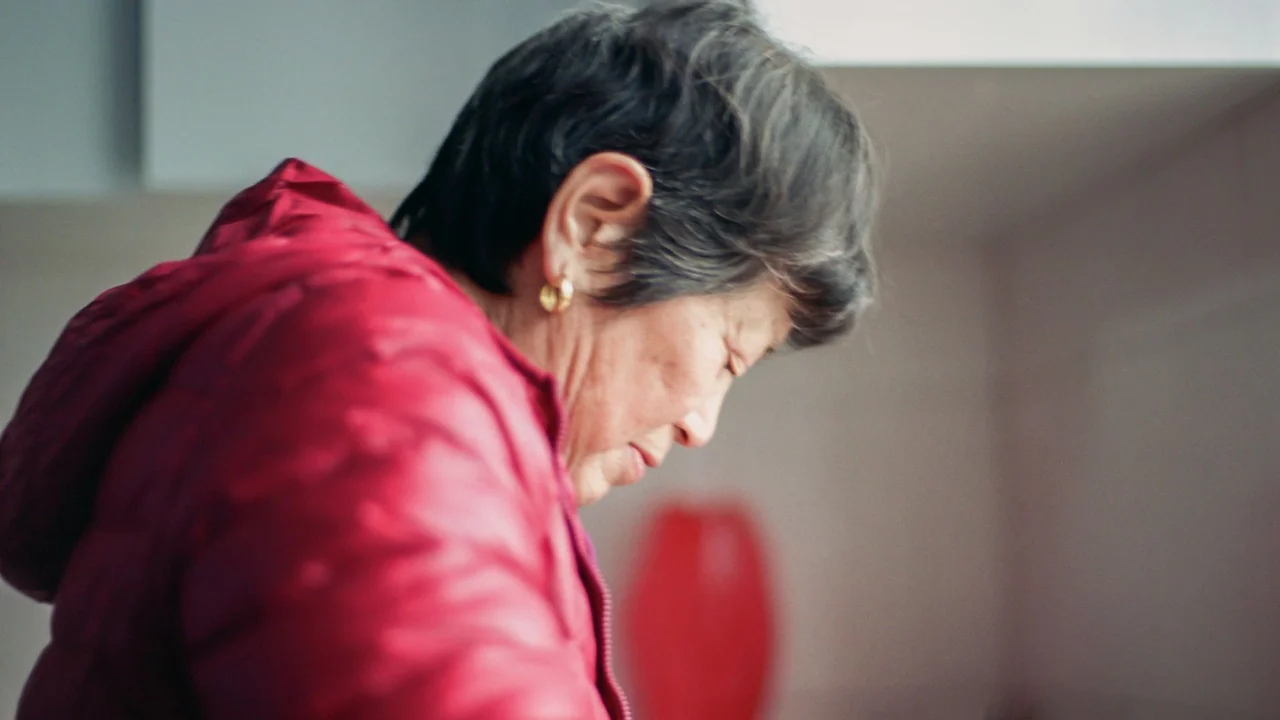
Tracey Wright, a neonatal nurse, was told she has weeks to live. She is now in Shanghai for Car T-cell therapy. Photo / Michael Craig
For 30 years, Tracey Wright has devoted her life to saving babies who might otherwise not make it.
Now the 56-year-old clinical charge nurse at Auckland City Hospital is fighting for her own survival.
Doctors have given Wright just 10 weeks to live.
She was diagnosed with non-Hodgkin lymphoma in 2023. Chemotherapy put her cancer into remission. Then last year Wright discovered a lump on her neck. Her cancer had returned.
Advertise with NZME.
A stem cell transplant last November offered another chance. It failed.
Now her last hope is experimental Car T-cell treatment in Shanghai . Wright and her daughter, Tamsyn, 22, made the journey two weeks ago, and her husband, Brett, has just joined them.
Although doctors have told her there is a 40% chance of success, Wright promised her children she will do everything possible to stay alive.
“I don’t want my kids to be traumatised. Even if the treatment doesn’t work, I don’t want them to be left thinking if only mum gave it a try.”
About eight weeks ago, Wright noticed unusual peripheral vision while heading for coffee. Her vision worsened at work, and a colleague checked her bloods.
The next day, an ophthalmologist examining the neonatal ward tested her eyes and found she couldn’t count how many fingers were held up in front of her.
Scans on October 13 revealed Wright had a brain tumour. A neurologist told her, while she was alone, that she had less than three months to live.
“As a nurse, I am pragmatic. I’ve had these conversations with families of sick babies, so I know how devastating they are. But it was surreal.
“I kept asking myself, ‘Is this really happening?’ I asked the neurologist to call my husband immediately.
“I am terrified, and I have to say I’ve never cried so much in my life. Sometimes I hold my husband’s hand, and we’re normally not like that. I feel really robbed. I may never see my children get married or become a grandmother,” Wright said.
Initially, the nurse hoped the cancer could be beaten. Then a haematologist delivered the devastating news: it had spread to her central nervous system.
Chemotherapy risked damaging her kidneys and, at best, would buy her little more time.
It was her husband, Brett, an operations manager, who suggested Car T-cell therapy in Shanghai as an option.
At the moment, Wright’s vision is blurry and, she says, she can barely see. The past few weeks have been taken up with medical appointments, scans and blood tests.
A Givealittle link has been set up to raise the $800,000 needed for Car-T cell therapy, which is not publicly funded.
Wright’s family have rallied together to cover her travel to Shanghai and the initial treatment costs. But the family home in Pt Chevalier will have to be sold to help pay for her treatment.
The nurse who has dedicated her life to saving babies sees the bitter irony in the fact that there is no public funding to save hers.
Wright and her daughter flew to Shanghai two weeks ago, hoping she would begin treatment at Sino United Health the next day. But mechanical problems forced the plane to turn back about 4am.
During the flight, Wright developed a severe headache and was admitted to Auckland City Hospital for an MRI scan. She was discharged on November 10 and boarded another flight to Shanghai.
However, she believes the aborted journey may have saved her life.
“It was a blessing in disguise. If we had kept travelling, I think I would have had a brain bleed.
“When I got back, I started oral chemotherapy, which cost us $15,000. They also increased my steroids and will start radiation therapy when I arrive.
“It’s disappointing.”
But she believed the delay was a sign her late mother was “looking out for me”.
“I really do think that if I’d stayed on that plane, I don’t know if I’d still be here,” Wright says.
Wright has also considered whether assisted dying might be preferable to a prolonged decline.
“I’m scared the treatment won’t work. Part of me wishes I could have an injection, go to sleep and have it all over. I’ve told Brett that if the treatment affects my brain and I’m no longer myself, I don’t want to live that way.”
This week her husband and sister-in-law fly to Shanghai. Wright told the Herald she has just completed four days of radiation, with a fitted mesh mask on her face, to shrink the tumour.
“I had a panic attack. It was terrifying; my heart was racing, the mask is moulded to your face while you’re strapped to the bed so you can’t move.
“My breathing was all over the place, I thought, ‘Oh no they are going to zap my brain and make things worse’.”
Wright will next have injections to stimulate her bone marrow for stem cells.
Away from the hospital, Wright’s life has always revolved around her family.
Wright met Brett when they were both 18, through her brother Shawn’s softball team.
But romance didn’t blossom until eight years later.
“We did everything back to front. We bought a house, had two children, then got married in 2005.”
They have two children: Tamsyn, who has completed a finance degree and is about to start a job with clothing company Ruby, and Denver, 25, who works in IT in Melbourne.
Debbie Gyde, married to Wright’s brother Shawn, says putting others before herself has always come naturally to Wright.
Three years ago, she cared for her uncle, who died aged 61, while she was undergoing chemotherapy herself. Five months ago, she lost her mother to Lewy body dementia, after nursing her through the illness.
After years devoted to caring for others, Wright took an unexpected detour of her own.
At 48, she swapped her nursing scrubs for an Air New Zealand uniform.
“I had a midlife crisis and became a flight attendant.”
After two years, she returned to nursing.
Wright still has a few things she’d love to do: visit Italy, take a trip to South Africa with Debbie for her 60th, walk Daisy, her beloved dog, and spend more time with her family.
But when the day ends, and the house grows quiet, the reality of what lies ahead can be harder to escape.
“The nights are the hardest. I’ll be lying there, and the tears just start flowing,” she says.
Wright wants to be remembered as kind, helpful and someone who went the extra mile.
“I’ve been a good person all my life and feel life hasn’t given me a good hand for my ending. So live life and don’t put things off – create memories so the people you leave behind remember you.”
Carolyne Meng-Yee is an Auckland-based investigative journalist who won Best Documentary at the Voyager Media Awards. She was a finalist this year for Best Current Affairs. She worked for the Herald on Sunday from 2007 to 2011 and rejoined the Herald in 2016 after working as an award-winning current affairs producer at TVNZ’s 60 Minutes , 20/20 and Sunday .
Latest from New Zealand
Controversial landlord's sections up for mortgagee sale