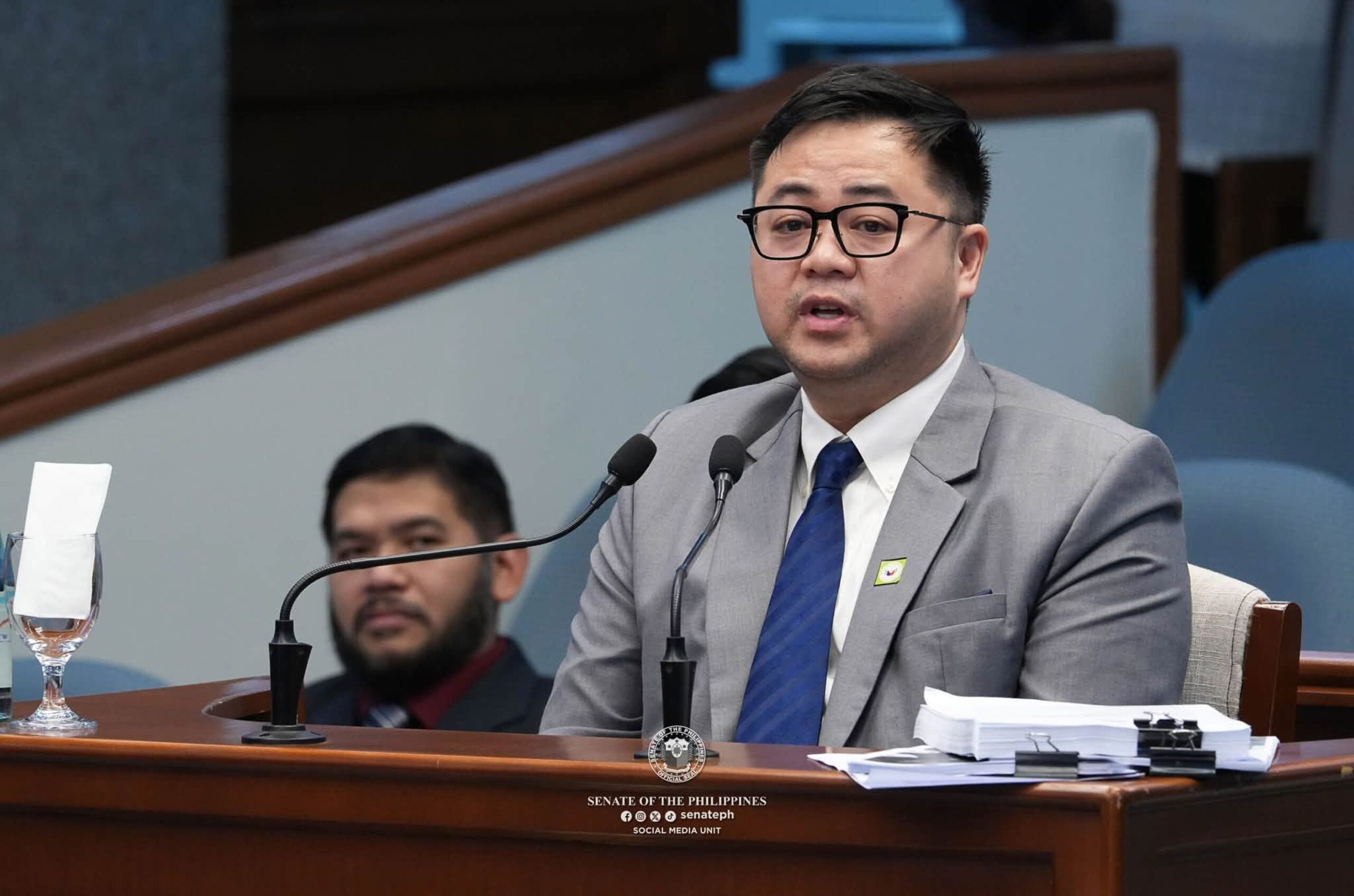
“I intend to take this fight directly to the new Congress,” the Democratic senator said after testifying at the National Oceanic and Atmospheric Administration’s 16 November hearing on Eco Minerals Inc.’s application for a license to explore the waters between Guam and Wake Island.
“We will ask Congress to stop the leasing of our Pacific seabed for mining and put a halt to this dangerous rush toward industrial exploitation,” Parkinson said.
With the Democratic Party set to take control of the incoming 120th Congress, Parkinson is optimistic his forthcoming petition will gain enough traction to stop federal efforts to open the Pacific seabed to commercial mining.
Several congressional Democrats have expressed reservations about deep-sea mining, citing insufficient scientific understanding of environmental and community risks.
Parkinson’s petition will ask Congress to call for a moratorium on deep-sea mineral exploration and commercial extraction until environmental and international legal concerns are addressed.
He will call for a congressional review of NOAA’s licensing of deep-sea mineral exploration and the Marine Minerals Administration’s review of seabed mineral leases in federal waters.
Whether a Democrat-controlled Congress can stop a Republican White House is up in the air. The Trump administration’s resource agenda has not changed and the president retains authority over leasing, permitting and agency rulemaking.
Last year, Rep. Ed Case, a Democrat from Hawaii, introduced H.R. 663 to oppose the permitting of seabed mining and exploration. The bill has languished in the House Committee on Foreign Affairs.
In 2024, Case and Rep. Raúl Grijalva, a Democrat from Arizona and a ranking member of the House Natural Resources Committee, sent letters to the White House, urging a moratorium on seabed mining until sufficient scientific and environmental data are available.
Eco Minerals is seeking to explore about 148,087 square kilometers of the Pacific seabed, covering eight regions of the Clarion-Clipperton Zone in central and eastern Pacific and a ninth area in international waters between Guam and Wake Island.
“To some in Washington, this may look like an empty expanse of ocean. But to those of us who call the Pacific home, these are not empty waters,” Parkinson testified. “They are our food security, our livelihoods, our cultural heritage and our inheritance to future generations.”
Eco Minerals is seeking to map out the target areas for polymetallic nodule deposits. These apple-sized nodules contain nickel, cobalt, copper, manganese and other rare-earth minerals used in batteries, electronics, manufacturing and military technologies. The world’s ocean floors are estimated to contain 210 trillion tons of polymetallic nodules
Tagged: #Pacific NEWS
© 2026 Post Courier Powered by Newspack