The document was released by Minister for Climate, Environment and Energy (DCEE) Darragh O’Brien at the COP31 climate change conference in Antalya, Turkey.
The TAFF roadmap brings together existing and emerging national and European Union-level commitments into one place.
"Ireland’s continued over-dependence on fossil fuels is a distinct weakness, not only a weakness from an energy sovereignty perspective but also a big risk in relation to price for people," Minister O’Brien said.
"Transitioning away from fossil fuel is critical to Ireland’s climate action, it is central to everything we do to remove and reduce our dependence on fossil fuel across all sectors."
An overall cost of the roadmap is not available, but in Budget 2027, the DCEE was allocated €1.28 billion for climate, energy and environmental measures.
In homes, the transition towards renewable energy will involve the sustained reduction in use of oil, natural gas, coal and peat for heating, and an increase in heat pumps and rooftop solar panels.
There will be a continuation of the National Residential Retrofit Plan to support people in improving the energy efficiency of homes. This is something the department says is key to achieving its objectives.
"We’ve got to ensure a clear message is sent out that fossil fuels are not our future, from a climate perspective, and they’re certainly not our future from an economic perspective," he said.
"It is now up to us to continue and to accelerate the work we’re doing in that space and we will."
The approach to transport includes investment in electric vehicle charging infrastructure, increased electrification of vehicles on the roads through targeted supports and market development, investment in public transport, and the expansion of walking and cycling infrastructure.
For freight transport, the TAFF roadmap says beyond vehicle electrification and fleet renewal, it will be looking at rail freight where possible, improved route planning, and operation and supply chain efficiency.
It acknowledges the "distinct challenges" of air and sea transport due to long asset lifetimes and the importance of international connectivity.
There will also be investment in education through apprenticeships, upskilling, and training workers in new areas, as job opportunities are forecast to come up across the renewable energy sector.
"Electrification is the future. Europe wants to be the first electro-continent and Ireland will play its part in that and that will secure jobs into the future in new technologies and new energies into the future," the minister said.
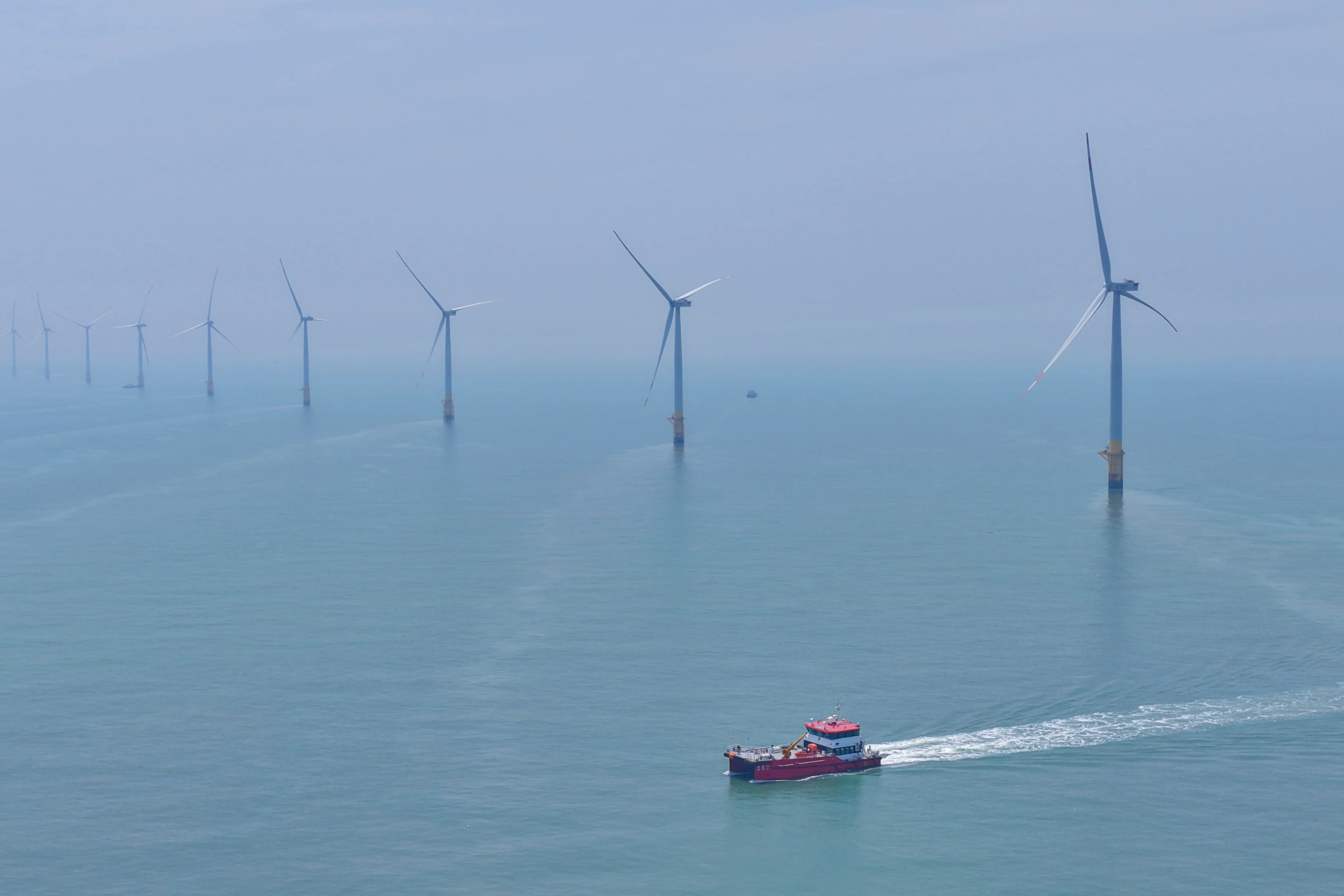
While plans progress towards greater solar, offshore wind and onshore wind electricity generation, gas will be used as a transition fuel to maintain supply.