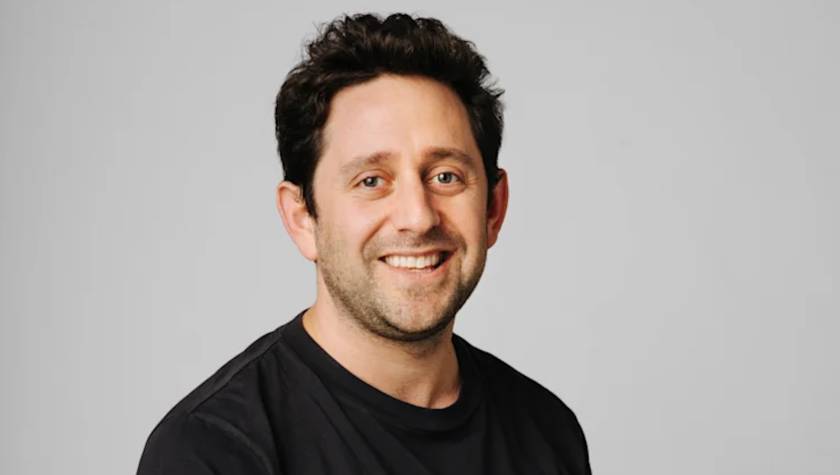
Remedy Robotics, a San Francisco medtech treating stroke patients remotely, and cofounded by Perth-born doctor David Bell, has raised US$62 million (A$92m) in a Series B, backed by a range of Australian venture funds.
US venture firm DCVC led the round, with existing backers Blackbird, Tony Fadell’s Build Collective, Divergent Capital and KdT Ventures chipping in alongside the the University of California’s investment office, Skip Capital and super fund Hostplus as new investors.
Remedy previously raised US$35 million across its Seed and Series A rounds.
The fresh capital is for a clinical trial across the University of California’s network by a surgical robot designed to let specialists treat stroke patients hundreds of kilometres away. The medtech is seeking US Food and Drug Administration approval for procedures on the blood vessels supplying the brain. It also plans to place prototype robots with clinical partners, including the Australian Stroke Alliance.
Bell spent eight years in medicine, including cardiac surgery and air retrieval, before studying at Stanford, where he met his cofounder and CTO Jake Sganga. In 2021, the pair lined a garage in Venice Beach with lead, bought a second-hand X-ray machine and had a colleague in Berkeley operate their prototype remotely.
“This funding will allow our world-leading hardware, software, and machine learning teams to progress the N1 system towards clinical trials and potential FDA approval, while also developing additional features including full autonomy,” Sganga said.
Get the best of Startup Daily straight to your inbox
Want to know the latest in startup news? Subscribe to our daily news and analysis coverage on what’s happening to ANZ startups, investors and the broader ecosystem. And best of all, it’s FREE!
By continuing, you agree to our Terms & Conditions and Privacy Policy .
The N1 robot lets a specialist at a console steer a catheter through a patient’s blood vessels. Its software uses machine learning to analyse scans, simulate procedures and match a 3D map of the vessels to live X-ray images. The team is also developing autonomous functions.
In August 2025, a Toronto neurosurgeon used the N1 to perform diagnostic angiograms on two patients at a hospital 6km away. A clinical team stayed with each patient while Pereira guided the catheter to check for narrowed or blocked vessels.
The N1 has yet to secure approval for routine clinical use anywhere. In Australia, Remedy and the Stroke Alliance want specialists in major cities to be able to remove a clot while the patient is still at their regional hospital.
Simon has been editor of Startup Daily since 2019. He hosted the Startup Daily show on streaming service ausbiz.com.au from 2020 to 2023, and now, the weekly podcast Startup 360. He was previously associate editor of Business Insider Australia, a national restaurant critic, editor of The Good Food Guide, and newspaper proprietor during a 30-plus-years career in journalism and publishing. He’s also an investor in early stage startups.
Recommended for you
Brisbane robotics surgery startup operates on $5 million Series A
Simon Thomsen Jan 16, 2025
UNSW medical robotics spinout raises $8.6m for US ambitions
Simon Thomsen Aug 8, 2026
Kiwi stroke diagnostics startup Wellumio scans $6.2m first close pre-Series A
Simon Thomsen Feb 12, 2026