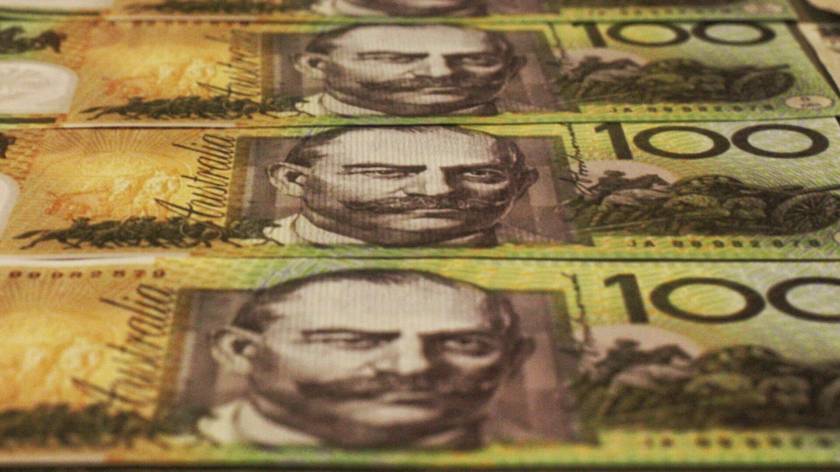
Counterfeit banknote detections have reached an eight-year high in Australia, with small businesses losing hundreds of dollars to fake cash.
Some 40,613 counterfeit banknotes were detected in the 12 months to March 2026, according to Reserve Bank of Australia figures. $50 and $100 notes account for around 95% of the total.
Related Article Block Placeholder Article ID: 345521
Cash only, or grin and bear it: Businesses brace for the surcharge ban
The counterfeit banknote detection rate rose 277% from December 2024 to March 2026.
Adrian Erdedi, owner of Thirroul-based açaí bowl shop Blessed Bowls in NSW, told SmartCompany his business lost approximately $250 to counterfeit notes.
“We received a heap of them over the course of a couple of weeks, and we’ve actually had a couple more come through recently,” Erdedi said.
Smarter business news. Straight to your inbox.
For startup founders, small businesses and leaders. Build sharper instincts and better strategy by learning from Australia’s smartest business minds. Sign up for free.
By continuing, you agree to our Terms & Conditions and Privacy Policy .
Staff discovered the fake notes after customers had left. Erdedi has since introduced UV banknote checkers and additional staff training.
“It’s obviously hard on small business. Everything is hard as it is, and then this is just an added complexity that we really don’t need,” Erdedi said.
Calvin Gorsuch, owner-operator of Thirroul homewares and variety store Ohana Home, said his business first encountered counterfeit cash last year, when a staff member accepted a fake $50 note.
“The $50 bill was definitely like a thicker polymer, so it was a bit more crunchy than a normal bill,” Gorsuch told SmartCompany .
Gorsuch bought a UV banknote checker, which staff recently used to identify and reject a fake $100 note.
“It just takes a few seconds, we just slide it under the lamp, and then we can verify it’s real,” he said.
Gorsuch said refusing suspicious notes can create tense situations. He tells his staff to avoid accusing customers of wrongdoing.
Organised crime eyes Australia’s cash economy
Associate Professor Terry Goldsworthy, a criminologist at Bond University, said the increase in counterfeit detections had reversed a decade-long decline.
“It’s a very sharp spike,” Goldsworthy told SmartCompany.
He said the detection rate remained below the approximately 30 notes per million recorded in 2015, but was now well above the longer-term average of 12 per million.
Australian Border Force detected 700 counterfeit currency consignments in 2025–26, compared with just three detections in 2022, according to data cited by Goldsworthy.
The face value of detected counterfeit currency also increased, going from approximately $25,000 to $6.1 million over the same period.
Goldsworthy said the figures suggest organised criminal groups are increasingly involved in counterfeiting Australian currency.
He said offenders may target busy retail outlets, poorly lit stores and inexperienced staff, using counterfeit $50 and $100 notes to purchase inexpensive items and receive genuine cash as change.
“For the smaller businesses, it’s problematic because that’s money they’ve lost,” Goldsworthy said.
“It’s not something they can necessarily absorb.”
Spotting the fakes
Goldsworthy urged retailers to train staff to recognise counterfeit notes, check security features and report suspicious currency to police.
The RBA provides guidance on identifying fake notes, while UV checkers can offer additional protection.
“It just comes down to staff being confident and comfortable checking those notes and making sure that they are correct and not fake,” Erdedi said.
Never miss a story: sign up to SmartCompany’s free daily newsletter and find our best stories on LinkedIn .
Digital Business Journalist
Simon Thompson has worked across print, television and radio in Australia, the UK and the United States. His reporting has covered business and financial markets, immigration, politics and water policy. He previously covered UK and European private equity in London and has reported for NPR and PBS-affiliated outlets in the US. Simon studied journalism and politics at Monash University.
Recommended for you
Commonwealth Bank boss declares cash is “here to stay”
David Adams Feb 25, 2025
Tech on tap: Aussie AI tools for beer and wine makers are taking hold overseas
David Adams Jun 23, 2025
Instagram and Facebook scam ad reporting just got easier
Tegan Jones Aug 12, 2025