
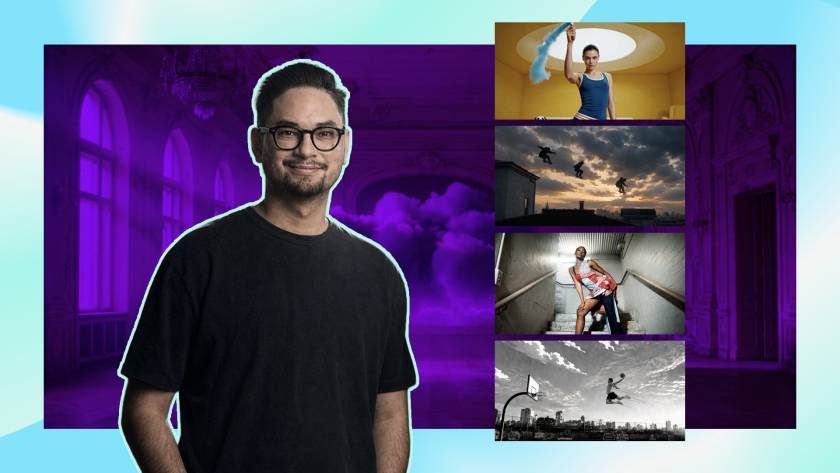
When Australian social media startup Spoony collected a design award last year, its founder, Nicholas Carlton, celebrated “fiercely human” expression in the “era of AI slop”. Carlton said bringing AI chatbots to Spoony was “antithetical” to its mission of fostering real, interpersonal connections. And when Spoony shut down earlier this year , Carlton told me Spoony struggled to win over investors whose focus had turned to AI.
Carlton, a television and commercial director before his startup career, quickly returned with another venture. He launched Parallax, an AI filmmaking worksuite. Now, he has partnered with fellow creative James Lawler to build Gobstopper, an AI-powered creative agency incorporating the Parallax toolbox.
Related Article Block Placeholder Article ID: 311108
Spoony raises $1 million for disabled and neurodivergent social platform
AI devotees are easy to find. So too are the technology’s hardcore critics. What about Carlton? Here was an founder appearing to shift from scepticism to adoption, in public, in a remarkably short period of time. I recently sat down with the Melbourne-based creative and entrepreneur to find out more.
We unpacked his thoughts on AI as a creative tool, what has changed since Spoony, and his plans for Gobstopper. Along the way, we discussed the ongoing power of taste, the intellectual property quagmire, and the value of process versus outcomes in creative work.
There were no easy resolutions to the big questions looming over AI, and its potential to reshape the economics of artistic practice. Even so, Carlton candidly detailed the creative and economic factors that stoked his new AI-powered venture, in a way likely to resonate with other founders confronting the same challenges.
Smarter business news. Straight to your inbox.
For startup founders, small businesses and leaders. Build sharper instincts and better strategy by learning from Australia’s smartest business minds. Sign up for free.
By continuing, you agree to our Terms & Conditions and Privacy Policy .
The following is a transcript of our conversation, lightly edited for clarity and length.
Neural Notes: Let’s go back to the start of Parallax. Last time we spoke, you had just brought this project off the ground. After the end of Spoony, new generation tools like Nano Banana really shifted your perception of what AI could do. Could you expand on that moment, and how that changed your priors about what this kind of technology could do in the creative space?
Nicholas Carlton: Yeah, absolutely. Coming out of 2025, I felt as sceptical as everyone else did at the time about AI in in the creative space. I had all the same apprehensions I think that a lot of creatives share right now. Feeling conflicting feelings around intellectual property, and you know, artistic integrity, all of those sorts of things. On top of that, the results, the work that I had seen produced by these AI models wasn’t that impressive. Think back to Will Smith eating spaghetti . Famously, everyone had twelve fingers.
The image of AI as a creative tool in my mind… definitely wasn’t something that I thought could be used in a professional context. But a filmmaker friend of mine started to show me some of the work that he was producing and I was blown away. I looked into what was happening in this space and was really impressed by the work that could be produced by these models. Their capabilities were clearly advancing so rapidly. And even now to this day, every week there’s a huge leap in capabilities that’s happening in the generative AI space. My jaw’s on the ground like every week about what it can do and all the different possibilities.
You know, it was clear to me when I saw a lot of those early test results that this is going to be a major tool in the filmmaking space, and filmmaking is going to change forever.
There’s obviously some issues that need to be resolved, and I think there’s a broader sort of societal debate that’s happening right now around the social license that AI has, and clearly some unresolved issues around intellectual property, and copyright, and compensation and consent.
All of those issues notwithstanding, the actual capabilities of these models on a technical level is just mind-blowing. We’re seeing AI deployed in all sorts of creative endeavours across advertising agencies, clients, brands, everywhere. I think every brand in the world right now is thinking about how they can use AI on some level. Some brands might reject it outright, but I think most brands are starting to test the waters and tinker with AI to varying levels.
I think this is a a huge exploding field right now. We’re certainly seeing that reflected in the interest that Gobstopper has generated. Gobstopper, as an AI creative studio, we’re positioning to try and leverage all of that interest.
NN: At that particular moment, late 2025, early 2026, how did that make you feel as a creative? Obviously, you have a rich background in television and creative campaigns. As someone who’s dedicated their career to that kind of work, what did that make you feel?
NC: I’ve had a lot of time to think about this and I think people have different reactions based on what part of the work they tend to enjoy. And what I’ve noticed is a lot of people actually are very process-oriented, and they take a lot of pleasure out of the process of filmmaking. That could be being on-set filming, the 12-hour days, running around like crazy and actually putting together the production. I realised for me, I’ve never been attached to any particular process. The process that has come before is just the means to the end.
When I was making films as a kid, I actually dreamed: “Wouldn’t it be incredible if you could actually attach a VCR recorder to your brain and as you dreamed, you could actually just record these images?” How incredible would that be? It was terribly inconvenient that you had to go out and actually stage these huge productions.
Filmmaking has always been very inaccessible. And it’s expensive. You have to marshal a lot of resources. I think people do get enjoyment out of that, but I also think it does actually limit who can become a filmmaker. And so for me, I saw the the possibility of AI filmmaking actually as a really empowering moment for artists.
The filmmaker now can be like a novelist. They, as a sole creator, can generate these huge worlds that previously were constrained by budget, or you were constrained by the resources that you were able to get, or you had to go and beg a gatekeeper to try and give you these resources. What I tell a lot of our clients now is like the promise of AI filmmaking is obviously faster and cheaper, right? That’s a given.
But actually the more interesting question is: “What can we do now that we could never do before? What can you do now with a blank page? What is the craziest idea that you can think of? What is the biggest idea that you can think of to communicate your vision?” Let’s go and do that, because we’re not constrained anymore by resources. So this is actually unlimited artistic freedom. And that’s what excited me most.
NN: On the journey to creating Gobstopper, could you describe the process of transitioning Parallax, as a suite of filmmaking tools, into the agency format that has just launched? Why did you think that was the right vehicle for this sort of venture?
NC: So I was coming out of building Spoony. Spoony was a social app for the the neurodivergent and disabled community. I was very much in in software mode, you know, thinking about apps and platforms, and when I started to think about the AI filmmaking space, my mind immediately went to software. I was looking around at all the different platforms that people were using, like Higgsfield and Comfy, and I was looking at just the workflow. I was very interested in the workflow. People were generating shots on these platforms, they were downloading them, then they would bring them into nonlinear editors like Adobe Premiere Pro, Final Cut Pro, DaVinci Resolve. I saw an opportunity to consolidate these disparate tools, and to bring everything into the one space so that generation was alongside editing, and you could easily kind of go up and down that stack.
I spent a few months building Parallax and then I started to have all these customer calls. What was really interesting was a lot of people were saying: “Yeah, this is great, but we actually kinda want you to just do the whole thing. Can you do the projects for us?”
This was a SaaS tool I was pitching them, on a $100-a-month subscription. They were saying, “can you do these projects that are worth several thousand?” I was weighing up these two paths, and it just felt like a bigger opportunity to go into the production space.
SaaS is a bit of a race at the bottom at the moment. The tools are being commoditised, so the the market is flooded with apps. What’s really lacking is judgment and taste. Now in a world where you can do everything, you know, actually being able to be selective about what you do is where the value is.
So I thought, “let’s try and price our taste”. That’s ultimately where we’re going to get a much greater form of leverage. The studio felt like a much more natural evolution for me than the pure SaaS play. There’s just so many competitors in the SaaS category, and I think I’ll let them fight it out, because they’ve raised hundreds of millions of dollars and are incredibly well resourced to do that.
NN: You mentioned taste there, and that’s a word that I’m seeing a lot. There’s a lot of anxiety, even in journalism, about AI tools replacing parts of the workflow handled by humans. How confident are you that this sort of agency model, which acts as the gatekeeper to the taste you’ve developed, is going to be replicable, or something that other creative businesses could model themselves on?
NC: I encourage other creatives to see AI as just another paintbrush. Creativity has always been the business of selling taste, and selling your point of view, and that’s accumulated over years, right? Like for me, it’s a lifetime of watching film, and thinking about film and visual communication. AI is just another playpen for that. Maybe it’s the ultimate playpen. I think it’s even more apparent now today who has taste and and who doesn’t.
It might be a spectrum: everyone’s able to to spin up AI generations. My mum was always showing me AI generations that she’s made, how she’s improved her photos. So in a world where the platforms are now flooded with content, the cream is really gonna rise to the top.
Related Article Block Placeholder Article ID: 328096
Neural Notes: Why Germany’s landmark AI copyright case is a warning for Australian companies
You can’t really hide behind process anymore. It’s actually going to be the taste that is the differentiator. In terms of the durability of taste as a differentiator, I don’t see that eroding anytime soon. I have seen companies try to codify taste and try to capture and reverse engineer it. I think for the time being, it is very much going to be driven by a human mind.
Journalism is a great example. We’re now four or five years into since ChatGPT launched. Does it feel like the writing from an LLM has gotten better? I don’t think so.
NN: It depends who you ask.
NC: The slop has increased, right? It hasn’t decreased.
NN: The volume of slop has increased, for sure. I think some of the stylistic quirks of the slop has changed. You have to admit an LLM can create a logically cohesive sentence. You can have the philosophical debate over whether it actually created it, or if it was aggregated from a statistical probability of what the next word should be. But yes, in the wrong hands, we see the slop cannon. Emails we get, pitches, even some submissions, we can still tell (Editor’s note: please stop doing this).
On that note, if I was a brand, I might just be able to go off to a computer and say, “okay, computer, create me an ad in the style of Michel Gondry”. And it just like churns out like this whimsical creative advert. Can you talk about how Gobstopper approaches intellectual property and copyright? If a brand comes to you with a certain vision, and a certain brief referencing a director, how do you think about attribution, acknowledgement, even copyright in the AI space?
NC: That’s a really good question. We’re still exploring, we’re still trying to navigate our way through some of these ethical questions. My personal view is that these LLM companies, you know, they’ve clearly ingested large amounts of pirated material on an industrial scale. I think you can see that in the the settlements that are happening in the US. They haven’t respected the life’s work of artists and creatives. They’ve basically just pillaged what what they can, and and I think that raises very serious questions around how we want to work with some of these companies.
By working with these companies we’re obviously accessing some of that material, potentially whether we want to or not. It’s all kind of baked into these huge data sets. I’m not quite sure what the future is for these LLM companies, but they clearly need to come to the table and negotiate legal access to the materials that they want to ingest.
And you know, these data sets need to be built on licensed material and the creatives that have contributed work to that, those data sets should be compensated and their consent should be sought. So that’s my view as a creative.
In terms of specific projects we do at Gopstopper… References have always been part of the creative process, even pre-AI. As a director, when I’ve pitched on ads, we take frame references from films that we think are relevant that we want to emulate for a particular ad, and we put references into the treatments. When I’m communicating with the director of photography or the crew, the art department, we always show references. To an extent, referencing different material and different projects is part of the creative process. And I think it’s part of how culture develops, and it’s how we kind of get to build on top of each other’s work.
There is a way to do that, that is consistent with how creatives have always worked, which is in this very interconnected way. But I think that what has actually happened has not respected that process, and we need to force those companies to comply.
NN: It’s a live debate politically at the moment. The government is trying to find the right settings to deal with this sort of issue. So you would be in support of an arrangement where creatives are compensated by these AI companies for the work that is being ingested?
NC: Yeah, 100%. And I think, you know, that’s an exciting opportunity as well, because I think potentially it opens up a new economy, a new marketplace where creatives can be compensated for their work. Maybe there’s some income streams there that creatives otherwise haven’t have access to.
NN: On Gobstopper itself, could you bring us up to speed on the sort of interest from clients so far and the work that Gobstopper might actually be producing at the moment?
NC: We’re still brand new. So we’re still making our presence known in the market. But so far we’ve been working on a pretty big wide range of projects. so everything from visual effects elements, to single shots, to a whole visual effects pass.
Related Article Block Placeholder Article ID: 345572
Realty check: NSW demands disclosures for AI-altered property photos
In ads, clients always change their minds. You shoot it one way and then they want something different in post. So AI gives you flexibility to do that. Maybe a little bit too much flexibility, because now clients could just sit there and go, “can we change that, that, that, that?” We’re quoting on fully synthetic ads. We’re quoting on mixed productions. I think mixed productions is potentially a very interesting future for AI filmmaking… potentially rendering real live action elements on AI backgrounds. Doing set extensions, that kind of thing.
And then the other really interesting area of our work has been actually working with startup founders on their launch videos, to announce to the world and help them tell their stories. Startup founders are great for Gobstopper. They’re all AI-pilled, so they have no qualms about working with an AI production company. They want to move really, really fast, and we’re able to move really fast. We’re able to turn around projects in a week. They all have really big visions and really big stories to tell.
NN: Do you think the adoption of AI is an inevitability for the startups today? You said you weren’t going to use AI in Spoony for a number of reasons, but you’re obviously now in an agency built around AI. Do you see a world where a digital business can exist in some from without AI going into its creation or output?
NC: Spoony was a really disappointing outcome. I would have loved to have continued going with Spoony for a number of years. I still really believe in what we were doing there, and even moreso in an AI world, I felt like the value of human connection was even greater.
But the truth is we really struggled to get the attention from investors. Last year, when we were trying to raise that third round, you know, all pretty much [said] the investment is going to AI.
There was no amount of spin or dressing up that we could do to pretend that we were an AI company. Like, we’re clearly a human-to-human company, selling human connection. I think that’s a huge shame that we weren’t able to continue that mission.
In some ways, what I’m doing now is a bit of a “if you can’t beat them, you’re going to join them.”
Ultimately ideas are gonna go where the capital is going. And right now the capital is flowing to AI. It’s probably going to become a self-fulfilling prophecy, ’cause the ideas that people gravitate towards are going to be AI ideas, because they’re the ones that are getting funded.
I think the answer to your question is probably yes, you do need to be an AI company to get funded right now. That’s probably the reality.
NN: What else should readers know about the work happening at Gobstopper?
NC : There’s a really interesting debate that’s happening right now around “is SaaS dead?” There was that infamous Sequoia post from last year. And that’s a really interesting tension that I haven’t fully resolved. It’s interesting thinking about this as we try to scale Gopstopper. We’re obviously an AI-enabled business. but I think the question will be whether or not we eventually become a venture-backed. I’m not too sure yet. The economics of SaaS, I think, are changing rapidly.
Neural Notes is a weekly AI column that looks at how AI is influencing Australia.
Never miss a story: sign up to SmartCompany’s free daily newsletter and find our best stories on LinkedIn .
Senior Business Journalist
Focused on the small business sector, David’s work covers the political, regulatory, and economic issues facing Australian entrepreneurs. Prior to joining SmartCompany, he was a reporter for Business Insider Australia. You can follow him on LinkedIn.
artificial intelligence
Recommended for you
Aussie startup Spoony shutting down after rejecting “antithetical” AI tools
David Adams Apr 8, 2026
David Adams Jan 28, 2025
Six ANZ startups that raised $63.5 million this week
Tegan Jones AND Eloise Keating Jan 31, 2025
