REVIEW: By David Robie
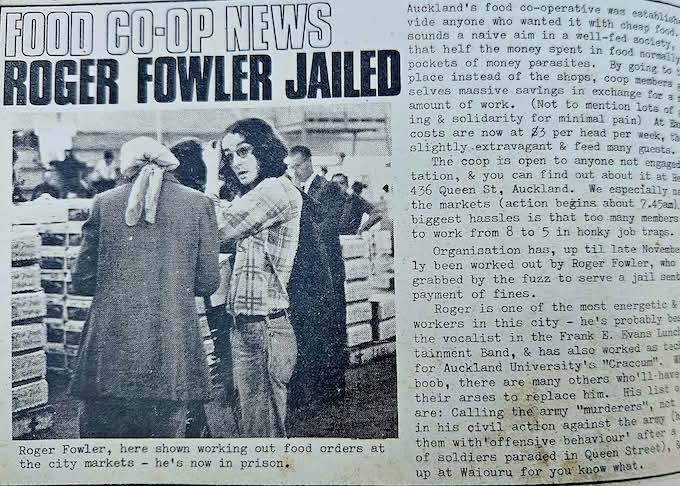
The seeds of resistance and later community empowerment began in Tāmaki Makaurau in a humble but lively bookshop in a rundown two-storeyed shop at 436 Queen Street. Called the Resistance Bookshop, it became the headquarters for protesters in 1969 for three years as anti-Vietnam War action grew and grew.
This was where many students, workers and radicals gathered — including the young Roger Fowler — to plan their protest action. Many of them lived in dilapidated inner-city flats within a stone’s throw of the bookshop.
As the anti-war movement gained momentum, many young men faced conscription into the New Zealand army and there were fears that conscripts would be drafted to fight in Vietnam — as was their fate in the United States and Australia.
Fowler, an icon of Aotearoa protest and community empowerment, recalled how those men whose “number came up” in the archaic Compulsory Military Training (CMT) “lottery law” were ordered to report to a special train at Auckland Railway Station.