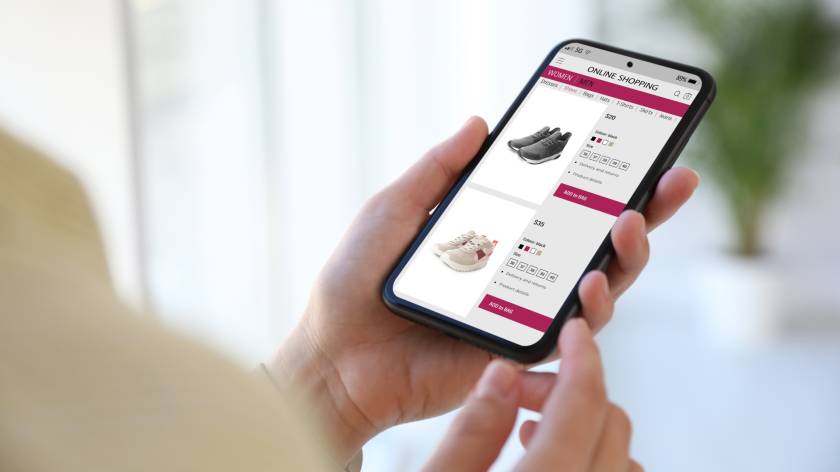
The Australian Competition and Consumer Commission (ACCC) is warning consumers “can no longer rely on appearance alone” when discerning if an online business is legitimate, as AI-generated ‘ghost’ stores infiltrate e-commerce at an alarming rate.
‘Ghost’ stores are online stores pretending to be local Australian businesses, but are often based overseas and drop-ship low-quality products.
The consumer watchdog cracked down on four ‘ghost’ stores last year, warning shoppers to steer clear of businesses allegedly misleading Australian consumers about their location.
Now, the ACCC says the rise of AI tools, helping scammers generate websites, imagery, and product descriptions, will further challenge consumers.
Related Article Block Placeholder Article ID: 319360
“Completely separate entity”: Real boutique speaks out after ACCC targets ‘ghost store’
“The rise of AI tools is making it easier for scammers to create convincing fake websites, advertisements, images and content that appears professional and legitimate,” an ACCC spokesperson told SmartCompany.
Smarter business news. Straight to your inbox.
For startup founders, small businesses and leaders. Build sharper instincts and better strategy by learning from Australia’s smartest business minds. Sign up for free.
By continuing, you agree to our Terms & Conditions and Privacy Policy .
“AI can be used to quickly generate professional-looking online stores, product images, customer reviews and marketing material, making it harder for consumers to distinguish genuine businesses from scammers or dodgy operators,” the spokesperson added.
“Consumers can no longer rely on appearance alone when deciding whether a business is legitimate.”
The ACCC recommends consumers independently verify the business, look for genuine contact details, check independent reviews, and search for the business name, along with the term ‘scam’, prior to making a purchase.
If a business claims to be Australian, consumers can also verify its details through official sources such as the Australian Business Register, they added.
“Scammers have long impersonated trusted businesses and brands, but AI has lowered the cost and effort required to do so,” the ACCC told SmartCompany .
“This means consumers may encounter websites and ads that look increasingly professional and closely resemble legitimate businesses.”
The spokesperson added Scamwatch is also seeing broader trends where scammers use AI to create more convincing emails, messages, documents and websites.
Just over a year ago, the ACCC provided guidance on handling ‘ghost stores’, released public warning notices , and alerted consumers about the operators of dodgy websites.
“In parallel to the public warning notices, the ACCC engaged with Shopify and Meta Platforms, which operated the platforms often being used by ghost stores to host and operate their webstores or for targeted paid advertisements,” the spokesperson said.
Following those talks, a further 10 suspected ghost stores ceased operating around December 2025.
AI closes the skills gap
Stephen Annicchiarico, director of IP, tech and commercial at WRP Legal, told SmartCompany there has “absolutely” been a rise in both consumers and brands affected by AI ‘ghost’ stores.
“While the ACCC has received hundreds of formal complaints about these types of ghost stores, there are likely many more experiences that are never formally reported,” he said.
Old-school legal tactics are still the most reliable way to combat online retailers using AI to emulate an existing brand, or fool consumers into thinking they’re something they are not.
Annicchiarico said consumers and small businesses can still lean on consumer, trademark and copyright laws to enforce their rights.
That process typically begins with a letter of demands, sent to the suspected store operator.
“And if that approach fails, instituting formal court proceedings (e.g. seeking an injunction) would be the natural next legal step,” he said.
“However, this often can be a costly and time-consuming exercise and such operators are often offshore, not easily identifiable and difficult to locate.”
Related Article Block Placeholder Article ID: 280226
Will AI soon run businesses as ‘artificial persons’?
Daniel Gervais AND John Nay
Another fast and cost-effective approach can generally involve filing takedown requests with the web host such as Shopify, or the domain registrar, like GoDaddy, Crazy Domains, and similar providers.
Concerned consumers and brands can also file a domain dispute, or report suspected AI ‘ghost’ store ads to the platform where they appeared, alongside reporting the store to Scamwatch or ReportCyber, and Google itself.
Charlotte Hale, disputes practice leader at commercial law firm LegalVision, said businesses ought to take action when they discover an impersonation scam.
Legitimate businesses should avoid “making confusing statements, failing to secure customer accounts, ignoring known impersonation activity, or delaying warnings after it becomes aware customers are being targeted,” she said, in a statement provided to SmartCompany.
Those businesses should also preserve evidence of alleged copycat activity, and warn consumers through their verified social media and email channels, Hale added.
“The rise of AI has lowered the barriers to entry — what once may have required a web developer, graphic designer, copywriter, photographer and videographer can now be created by one person, without technical experience, in a matter of hours,” Annicchiarico continued.
“These tools also allow for much of the process to be automated and run with minimal human input, so ghost stores can be replicated at volume.”
Annicchiarico added that “AI closes the knowledge and skills gap” as those creating AI ‘ghost’ stores are able to replicate professional-looking output, resulting in “quite convincing and tailored content at scale”.
Apart from keeping updated with alerts from the likes of the ACCC and Scamwatch, consumers can keep an eye out for the classic signs of dodgy businesses.
“Ghost stores often incorporate time-sensitive offers (e.g. “closing down”, “last 24 hours” or “70% off”) with a view to triggering impulse purchases,” he said.
“Ghost stores are often mentioned, in a negative light, on forums such as Reddit or online customer review websites such as Trustpilot, or listed on Scamwatch.”
Tellingly, the stores often fail to have any legitimate contact details and may not be Australian-registered businesses.
Such stores may also take images from elsewhere, and usually don’t operate from a traditional “.com.au” or “.au” domain.
Never miss a story: sign up to SmartCompany’s free daily newsletter and find our best stories on LinkedIn .
Kate is associate editor at SmartCompany. Kate was previously the section editor of Digital Nation, under iTnews. Here, Kate covered technology in the finance space with an interest in emerging innovations and industry movements. Prior to iTnews, Kate covered the finance and banking sector for AB+F.
Senior Business Journalist
Focused on the small business sector, David’s work covers the political, regulatory, and economic issues facing Australian entrepreneurs. Prior to joining SmartCompany, he was a reporter for Business Insider Australia. You can follow him on LinkedIn.
Recommended for you
David Adams Jul 4, 2025
ACCC says US tech giants are exploiting Aussie businesses, consumers
Jennifer Dudley-Nicholson Jun 24, 2025
ACCC sues Microsoft for allegedly deceiving Aussies with AI price hike
Alex Mitchell AND Farid Farid Oct 28, 2025