
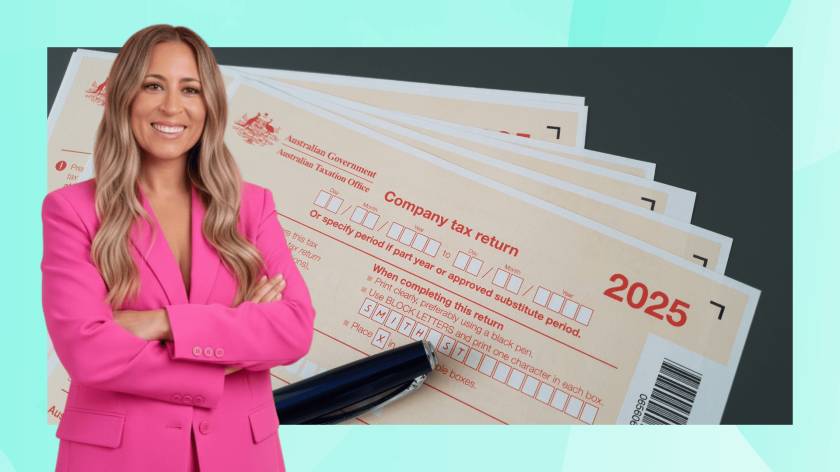
Every year, there is a wave of business owners who put off lodging their tax return because life gets busy or they want to delay paying their taxes. On the surface, a later lodgment might feel like no big deal as you eventually get your refund or pay your tax bill .
What many business owners overlook is the flow-on effect a delayed lodgment has on their Pay-As-You-Go (PAYG) instalments for the following financial year. This is where things can get messy, and in some cases, expensive.
Related Article Block Placeholder Article ID: 319625
Why paying tax means you’re winning (yes, really)
How late lodgments create a two-year tax lag
PAYG instalments exist to help you pre-pay your tax throughout the year so you do not get hit with one large bill at tax time. The ATO works out how much you should be paying each quarter based on your most recently assessed tax return. The keywords here are ‘most recently assessed’. If your return has not been lodged, then the ATO cannot use your current year’s income as the basis for your instalments. Instead, the tax office keeps relying on data from the year before.
This is where the lag begins.
Imagine your taxable income increased this year because your business grew. If you lodge on time, the ATO sees that increase and adjusts your instalments upward, so you stay in line with your expected tax for the year.
Smarter business news. Straight to your inbox.
For startup founders, small businesses and leaders. Build sharper instincts and better strategy by learning from Australia’s smartest business minds. Sign up for free.
By continuing, you agree to our Terms & Conditions and Privacy Policy .
But if you lodge late, the ATO continues charging instalments based on your earlier lower income. When you finally lodge the return, the catch-up amount can be substantial and affect your cashflow. You are suddenly faced with a tax bill that would have been smoothed out across the year if you had lodged on time.
The reverse can also happen. Say your income dropped this year due to a slower market or reduced trading. If your return is lodged on time, the ATO updates your instalments based on that new lower figure. But if you delay lodging, the ATO continues charging instalments based on a higher year, even though your profit has dipped. You end up paying far more tax during the year than you need to, and you tie up cash that could have been used in your business.
Eventually, you might get some of that cash back at assessment time, but by then, the cashflow damage has already been done.
Related Article Block Placeholder Article ID: 318837
A tax deduction isn’t a refund – it’s 30c on the dollar (if you’re lucky)
This is why late lodgment often creates what accountants call a two-year lag. The instalments for the year ahead are not based on the year that just finished. They are based on the year before that. You are effectively running your tax obligations off numbers that are no longer relevant.
It is easy to see how this creates confusion and cashflow pressure, as many business owners only realise the issue when their accountant delivers the news that their instalments are completely out of sync and a large tax bill is coming.
Technically, you can vary your PAYG instalments based on current year estimates, but the majority of business owners don’t know how to, or don’t ask their accountant to look after it, and instead carry on just paying the ATO-advised amount.
There is also a practical business finance angle to consider. Most businesses plan their upcoming year around expected income, cashflow, and commitments. When your PAYG instalments are misaligned, you can lose sight of what your actual tax position looks like, budgeting becomes harder, and cashflow forecasting becomes unreliable.
It doesn’t stop there
For those who run companies or more complex structures, the ripple effect can go even further.
If you have dividends, trust distributions, or inter-entity transactions that rely on accurate current year tax information, a delayed return can affect the timing of those decisions. The sooner your return is finalised, the sooner you have clarity on what distributions make sense, what tax credits are available, and how to plan your next year properly.
Lodging on time is not about ticking a compliance box. It is about keeping your financial picture up to date so the ATO calculates your instalments correctly and you avoid working off numbers that are years behind. It also keeps your cashflow smooth, your planning clearer, and your stress levels lower.
If tax time is always a rush, consider getting organised earlier or working with your accountant to prepare gradually throughout the year . A small shift in timing can remove a big headache later.
Never miss a story: sign up to SmartCompany’s free daily newsletter and find our best stories on LinkedIn .
Natalie Lennon is the founder and director of Two Sides, an award winning, 100% online accounting and bookkeeping firm in Sydney’s South. Lennon is a fellow chartered accountant and registered tax agent with over 20 years experience working with and in various small, medium and multi-national businesses and accounting firms with a mantra to work smarter not harder through the application of streamlined processes and smart technology. She was recently named Thought Leader of the Year at the 2026 Australian Accounting Awards.
delayed tax return
Recommended for you
DIY tax returns: The deadline for self-lodging sole traders is closer than you think
Natalie Lennon Oct 1, 2026
ATO details three-step checklist before seeking lodgment deferral
David Adams Mar 10, 2026
ATO drags non-lodgers out of the shadows as prosecutions jump 80%
Simon Thompson Sep 17, 2026