
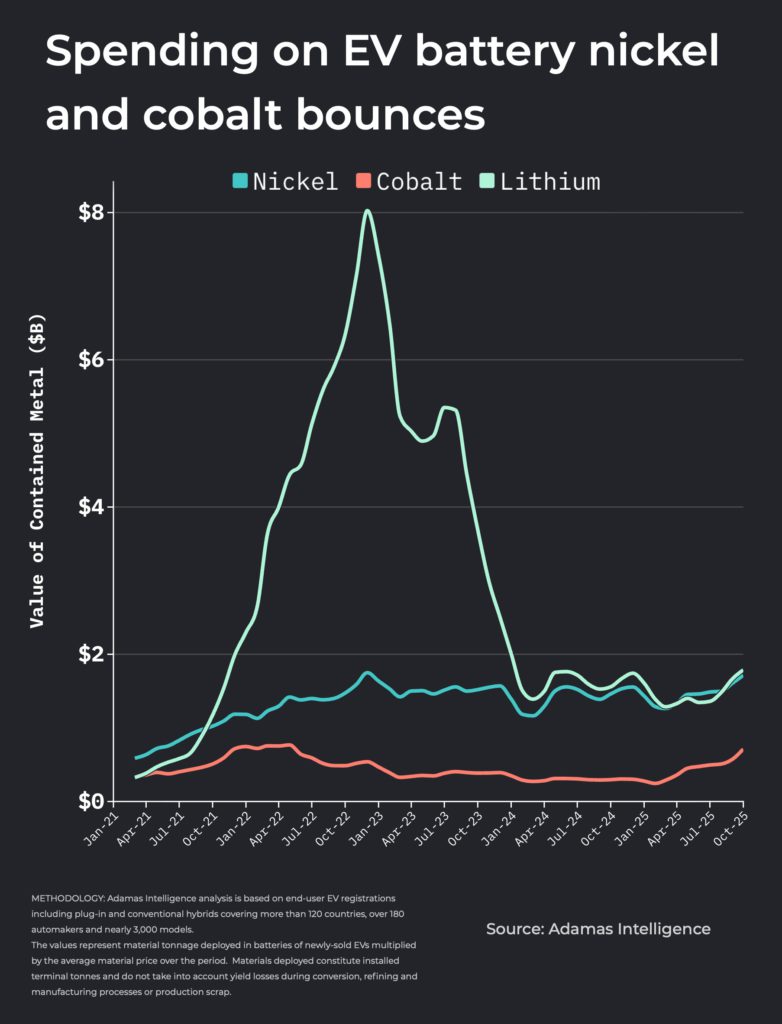
In 2016, Elon Musk famously said :
“Although [they’re] called lithium-ion, the actual percentage of lithium in a lithium-ion cell is approximately 2%. Technically, our cells should be called nickel-graphite, because the primary constituent in the cell as a whole is nickel. There’s a little bit of lithium in there, but it’s like the salt on the salad.”
In 2016, nickel cobalt manganese (NCM) and nickel cobalt aluminum or NCA, favoured by Tesla and its cell provider Panasonic dominated the market. Tesla’s Model S and Nissan’s Leaf were the bestselling EVs in the world at the time.
Lithium iron phosphate batteries (LFP) did have a place in the market then, but the chemistry’s inherent disadvantages – low energy density and therefore limited range – saw it confined to low-end urban runabouts and delivery vans.
On a battery capacity deployed basis – a better indicator of battery metal demand than unit sales alone – LFP’s share of the EV market actually fell from more than 20% in 2016 to less than 5% three years later. And that in a market, in GWh terms, which was larger by a factor of five.